Choosing the right Power Window Motor supplier requires more than comparing prices or browsing polished product pages. Vehicle manufacturers, aftermarket distributors, and repair specialists need dependable performance under daily use. A motor must lift the glass smoothly, resist heat, and fit the regulator without unnecessary modification.
This guide examines China’s top Power Window Motor suppliers through practical purchasing criteria. These include manufacturing experience, product coverage, voltage options, torque consistency, testing procedures, and export capability. Factory audits, sample evaluation, and customer feedback also matter. A supplier may offer attractive pricing, yet weak quality control can create noise, slow movement, or early failure.
Real details often reveal more than advertising claims. Look for production lines with visible inspection stations, documented testing records, and clear packaging standards. Ask whether the supplier supports left-hand and right-hand drive applications. Confirm connector design, mounting points, gear materials, and warranty terms before placing a large order. Small differences matter.
The ranking should not be treated as permanent. Supplier capacity, technology, and service quality can change over time. Some companies may excel in volume production, while others provide better customization or communication. This guide therefore offers a practical reference, not an absolute verdict. Buyers should still verify samples, certifications, lead times, and after-sales support independently. A careful decision takes longer. It usually costs less.
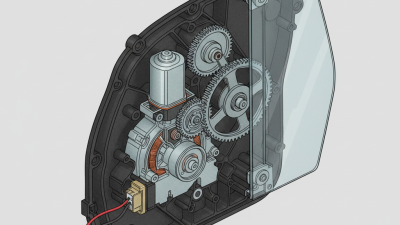
A power window motor is a compact electric actuator that moves a vehicle’s glass vertically. It usually works with a regulator, switch, fuse, and control module. When the driver presses the switch, electrical current reaches the motor. The motor turns a gear, and the regulator converts rotation into controlled glass movement.
Most systems use a reversible direct-current motor. Reverse polarity, and the window changes direction. A cable or scissor regulator then guides the glass inside the door.
Some newer systems add position sensors and anti-pinch detection. If resistance rises near a hand or object, the controller should stop or reverse the glass. U.S. NHTSA Federal Motor Vehicle Safety Standard 118 addresses power-operated window systems and their injury-prevention requirements.
The scale is significant.
OICA reported global motor-vehicle production of about 93.5 million units in 2023. Each vehicle may require several window motors, creating demanding volume and durability targets. Industry testing commonly checks millions of switching cycles, temperature changes, water exposure, and abnormal loads. Real doors are noisy, cramped, and sometimes misaligned. That matters.
A motor can sound healthy while its regulator is failing. I have seen diagnosis go wrong when technicians replace the motor without checking glass channels or wiring resistance. The better approach measures current draw, listens for gear noise, and tests movement under load. This is not perfect, because door designs and supplier specifications vary. Still, careful testing reveals more than a simple switch replacement.
Evaluating China’s leading power window motor suppliers requires more than comparing prices.
Start with motor specifications, including voltage range, rated torque, speed, noise, and duty cycle. Ask for recent test reports and traceable sample records. A reliable supplier should explain how each result was measured.
Request production samples from the same line used for regular orders. This matters because laboratory samples can look better than factory output.
During testing, check movement under cold, hot, dusty, and repeated-use conditions. Listen for gear noise and inspect cable terminals, housings, and mounting points. Small defects often appear after hundreds of cycles.
Supplier experience should be verified through process evidence, not polished presentations.
Review quality procedures, incoming material checks, end-of-line testing, and corrective-action records. Confirm whether engineering staff can adapt torque curves or connector designs without weakening durability.
Communication also matters. Responses should be specific, dated, and supported by documents.
A supplier that admits a past failure may be more dependable than one claiming perfect performance. No checklist catches everything.
I would still conduct an independent inspection before shipment and repeat key tests after arrival.
Lead time, packaging strength, spare-part support, and warranty handling deserve equal attention. A low unit price can become expensive when returns, delays, and vehicle rework enter the calculation.
China’s top 10 power window motor suppliers are often judged by more than factory size. A reliable supplier should show stable torque output, consistent gear quality, and clear production records. In sourcing work, I would request samples from each shortlisted supplier before discussing large orders. The sample should operate smoothly under repeated up-and-down cycles. Noise matters. Fit matters.
Strong suppliers usually support passenger cars, commercial vehicles, or customized door systems. They can provide 12V and 24V motor options, mounting variations, connector designs, and left- or right-hand configurations. Ask for information about copper winding, magnet strength, gear materials, and thermal protection. A serious factory should also explain its testing process, not merely send a certificate. Production traceability, incoming material checks, and final inspection records add practical confidence.
Cost remains important, but the lowest quotation may hide weak brushes, loose gears, or poor sealing. Request durability data, load testing results, packaging details, and warranty terms in writing. Check whether the supplier can maintain the same performance across repeated batches. No supplier is perfect. Some factories communicate well but react slowly to engineering changes; others offer strong machining but limited documentation. That difference can affect installation time, returns, and long-term maintenance. Supplier rankings should be reviewed carefully, because product fit may change between vehicle platforms and production years.
China’s top ten power window motor suppliers differ more in execution than in basic product range. Most offer front and rear motors, regulator assemblies, and left- or right-hand drive options. The stronger suppliers provide sample testing before mass production. Their motors should show stable torque, controlled noise, and smooth movement across repeated cycles. Some factories also test temperature changes, vibration, moisture, and corrosion. These details matter when a window must operate during winter mornings or heavy rain.
Quality evidence deserves close attention. A reliable supplier can share inspection records, material certificates, and production traceability. It should explain how brush wear, gear alignment, and electrical protection are controlled. Capability is visible on the factory floor. Look for automated winding equipment, calibrated test benches, and technicians who understand vehicle interfaces. A supplier with in-house tooling can adjust mounting points faster. However, large equipment lists do not always prove better results. Actual samples may reveal uneven speed or excessive motor noise.
Product development support creates another clear difference. Some suppliers handle drawings, prototype changes, connector matching, and packaging requirements. Others mainly produce from fixed customer data. Both models can work, depending on the project. No ranking is perfect. A supplier may pass a laboratory test yet struggle with delivery consistency. Another may respond quickly but lack strong documentation. Buyers should compare test reports, sample performance, communication records, and after-sales response together. A careful audit often reveals more than a polished presentation.
| Supplier ID | Primary Product Coverage | Common Vehicle Applications | Nominal Voltage | Gearbox Options | OEM / ODM Support | Quality-System Evidence | Typical Production Model | Typical MOQ | Main Capability Advantage |
|---|---|---|---|---|---|---|---|---|---|
| Supplier 01 | Front and rear power window motors; regulator-integrated assemblies | Passenger cars, SUVs, light commercial vehicles | 12 V / 24 V | Worm gear; spur gear | Available | Automotive QMS documentation; PPAP support | High-volume standard parts | 100–500 units | Broad catalog coverage and stable repeat production |
| Supplier 02 | Compact window lift motors; left- and right-hand versions | Small cars, sedans, compact SUVs | 12 V | Worm gear | Available | Incoming inspection; end-of-line testing | Cost-focused batch production | 200–1,000 units | Competitive pricing for high-volume replacement programs |
| Supplier 03 | Heavy-duty window motors; commercial vehicle assemblies | Trucks, buses, vans, agricultural vehicles | 12 V / 24 V | Metal worm gear; reinforced gear train | Available | Load testing; durability test records | Low- to medium-volume customized production | 50–300 units | Higher-load designs for commercial applications |
| Supplier 04 | Regulator and motor modules; anti-pinch compatible designs | Mid-size cars, SUVs, crossover vehicles | 12 V | Worm gear; integrated regulator drive | Available | Functional safety inputs; traceability controls | Platform-based customization | 100–500 units | Good integration capability for complete window-lift modules |
| Supplier 05 | Aftermarket replacement motors and repair components | Passenger cars and light commercial vehicles | 12 V / 24 V | Worm gear; plastic gear | Limited to standard modifications | Part inspection; batch sampling | Multi-SKU aftermarket production | 100–300 units | Wide replacement-part selection and flexible packaging |
| Supplier 06 | Low-noise power window motors; comfort-focused assemblies | Passenger cars and premium interior platforms | 12 V | Noise-optimized worm gear | Available | Noise, vibration and current-draw testing | Engineering-led customized production | 50–200 units | Strong focus on operating noise and smooth movement |
| Supplier 07 | Universal-fit motors; replacement units for multiple platforms | Older passenger cars and general replacement market | 12 V | Standard worm gear | Limited | Basic functional inspection | Small-batch aftermarket production | 50–200 units | Flexible fitment support for low-volume applications |
| Supplier 08 | Electric window motors for buses, vans and specialty vehicles | Buses, recreational vehicles, utility vehicles | 12 V / 24 V | Worm gear; heavy-duty gear train | Available | Environmental and endurance test capability | Project-based production | 20–100 units | Suitable for special vehicle and low-volume projects |
| Supplier 09 | Basic motor units; standard replacement configurations | Passenger cars and entry-level commercial vehicles | 12 V | Plastic worm gear | Standard options only | Basic inspection records | Price-sensitive batch production | 200–1,000 units | Low entry cost for standard, non-customized requirements |
| Supplier 10 | Small electric drive motors; prototype and development support | New vehicle projects, specialty platforms, prototypes | 12 V / 24 V | Application-specific gearboxes | Available | Design verification; sample approval process | Prototype-to-production transition | 10–50 units | Strong engineering flexibility for new or modified designs |

How to Choose the Right Chinese Power Window Motor Supplier
China has many power window motor suppliers, but a top-ten list cannot replace careful evaluation. The right supplier should understand your vehicle platform, mounting points, gear design, and voltage requirements. Ask for drawings, wiring diagrams, and sample test records. A reliable factory should explain torque, noise, speed, duty cycle, and operating temperature clearly. Vague answers are warning signs.
Tips: Request samples from at least three suppliers. Compare lift strength, glass travel, noise, and current draw. Inspect the connector, housing, gears, and mounting holes. Confirm production capacity, quality controls, packaging, and lead times. Also ask how failed samples are analyzed. This small detail often reveals real engineering experience.
Do not judge a supplier by low pricing alone. A cheaper motor may use weaker gears or inconsistent brushes. During testing, run repeated up-and-down cycles under realistic glass loads. Check performance after heat exposure and voltage variation. I once focused too much on sample appearance, and missed unstable current readings. That mistake changed my evaluation process. Request a pre-production sample before placing a larger order. Keep written specifications, inspection criteria, and approved changes in one file. A supplier may sound professional, yet documentation shows whether the process is dependable.
Use this practical evaluation framework to compare Chinese power window motor suppliers. Quality control, application fit, reliability testing, and delivery capability should receive the highest priority before price.
The percentages represent recommended purchasing weights for a balanced supplier assessment. Buyers can adjust the weighting according to vehicle platform, order volume, target market, and customization requirements.