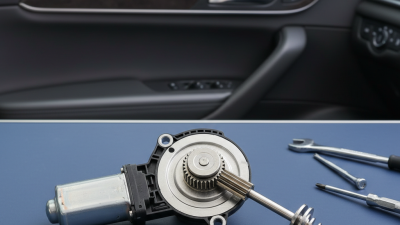
What is a Window Lifter Motor and How Does it Work?
In the automotive world, the Window Lifter Motor plays a critical role. This motor controls the movement of vehicle windows, allowing them to rise and lower smoothly. According to Dr. Laura Tran, an expert in automotive engineering, “The efficiency of a Window Lifter Motor significantly affects overall vehicle comfort.” Her insight highlights the importance of this component.
The Window Lifter Motor operates using a simple mechanism. Typically, it converts electrical energy into mechanical motion. This process involves a small electric motor that powers a gear system. This makes it essential for modern vehicles that prioritize convenience and safety. Many people take this feature for granted, but it requires precision engineering.
Understanding the Window Lifter Motor is crucial for both car owners and manufacturers. While the technology seems straightforward, issues can arise over time. Factors like wear and tear or electrical problems can affect its reliability. Regular maintenance is important to ensure optimal performance. Reflecting on these aspects can lead one to appreciate the complexity behind such a seemingly minor component.
What is a Window Lifter Motor?
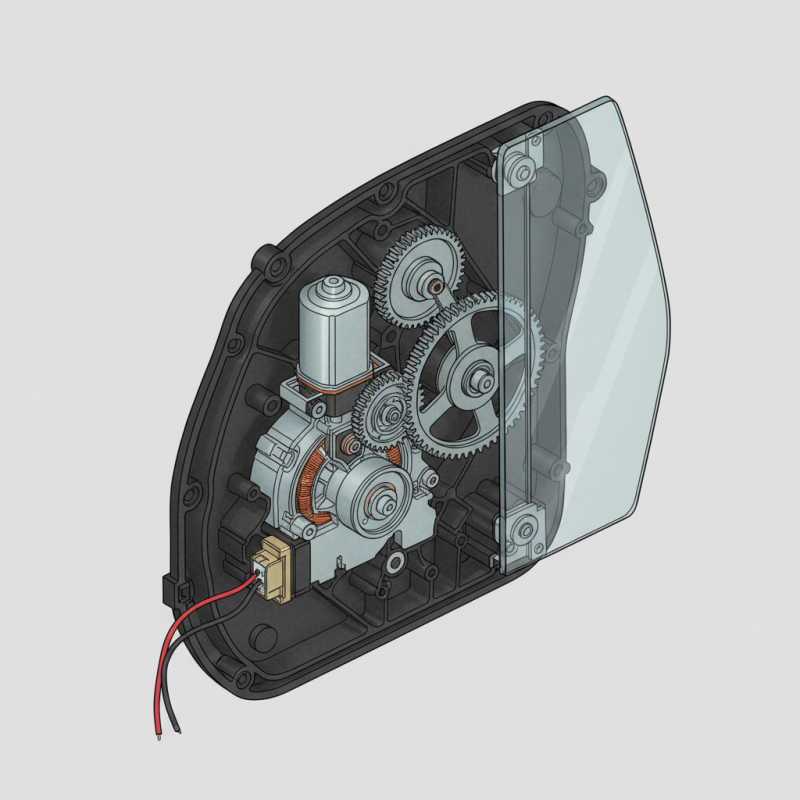
A window lifter motor is a vital component in modern vehicles. It controls the movement of car windows. Understanding its function can enhance your appreciation of automotive technology. When you press the window switch, an electrical signal activates the motor. This initiates the movement of a gear system linked to the window.
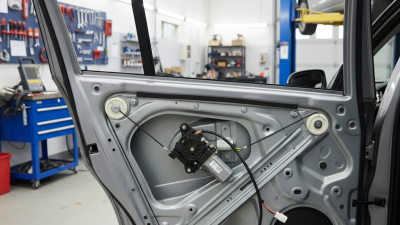
The motor typically consists of a small electric motor and a transmission assembly. The design allows for efficient torque transfer. As the motor turns, it rotates the gears, which either pull or push the window up or down. Over time, the mechanism can wear down. Factors like dirt and moisture can lead to malfunctions. Regular maintenance of window lifter motors can help prevent unexpected failures.
Despite their durability, motor issues can arise. Sometimes the window may get stuck or move slowly. These problems can be frustrating. Identifying the cause is essential. Is it the motor, or perhaps the window track? Regular checks can save time and expense. Keeping the window tracks clean and lubricated helps maintain smooth operation.
Window Lifter Motor Performance Data
This chart illustrates the performance metrics of a typical window lifter motor, showcasing its operational characteristics such as voltage, current, speed, and torque.
Key Components of a Window Lifter Motor
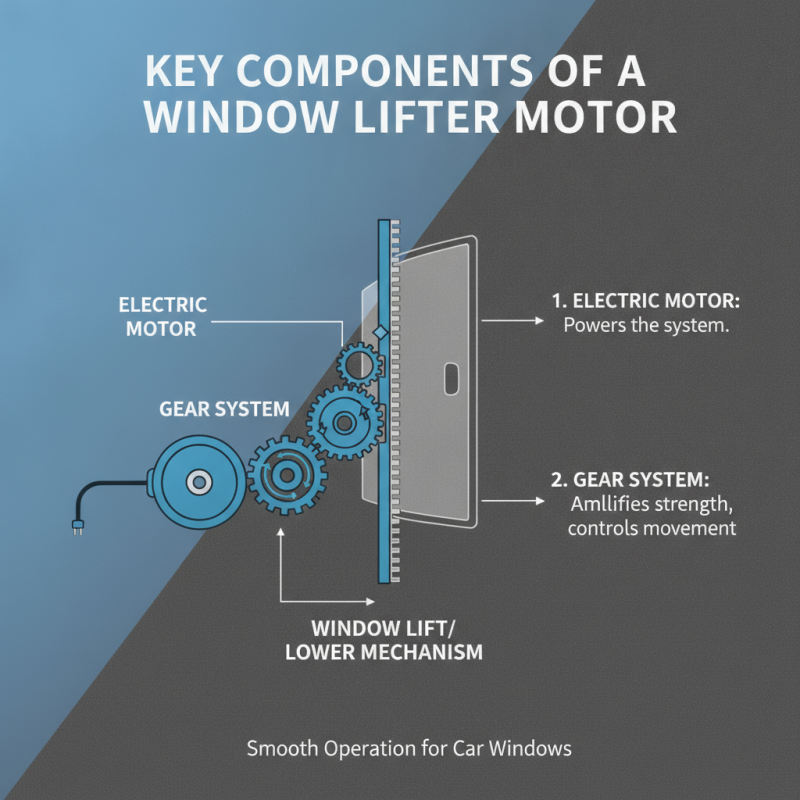
A window lifter motor is essential for the smooth operation of car windows. Understanding its key components helps decipher how it functions. At the heart of this system is the electric motor. It powers the lifting mechanism. This motor is linked to a series of gears, which amplify its strength. When activated, the motor's rotation moves the gear system. This, in turn, raises or lowers the window.
Next, we find the regulator. This component is critical. It translates the motor's rotational motion into linear motion. Often, this is a cable-driven or a scissor-type mechanism. Cables or arms move within a track to guide the window. Additionally, there's the switch, which initiates the motor’s movement. Often overlooked, the switch connects to the car's electrical system. Its function can be affected by wear over time.
Finally, the assembly includes protective elements. These can prevent malfunctions due to debris or moisture. However, not all designs are foolproof. Weak points may exist, leading to issues like uneven window movement. Regular maintenance can help identify such flaws early. Keeping these components in good condition ensures reliable performance.
How the Window Lifter Motor Operates
The window lifter motor is a crucial component of modern vehicles. It facilitates the smooth operation of power windows. Understanding how it operates helps in troubleshooting common issues.
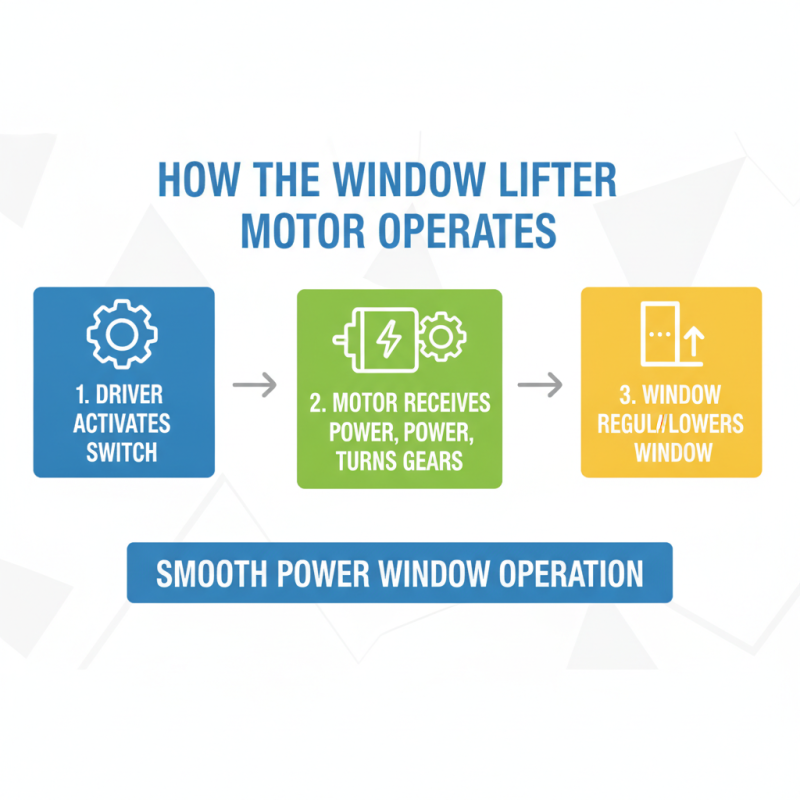
When you press the window switch, an electrical signal is sent to the motor. This signal activates the motor, causing it to rotate. The rotation then moves a geared mechanism, which is connected to the window regulator. This system efficiently raises and lowers the window. In essence, it's a simple yet effective design.
Despite its reliability, window lifter motors can experience problems. Typically, wear and tear can lead to malfunctions. Sometimes, the motor may fail to respond due to a blown fuse or wiring issues. Regular maintenance checks can prevent these inconveniences. Understanding the basics of how this motor operates can empower vehicle owners to address minor issues confidently.
Common Issues with Window Lifter Motors
Window lifter motors, integral to power windows, can face various issues that hinder performance. Common problems include motor failure, poor wiring connections, and obstructions in the window track. According to industry reports, approximately 15% of vehicle repairs relate to window lift systems, highlighting their prevalence in automotive maintenance. Motor failure often results from wear and tear over time, limiting the window's ability to open or close smoothly.
Another frequent issue is worn-out gear assemblies. When gears wear down, they may skip or jam, leading to inconsistent window movement. Environmental factors, like dirt and moisture, also contribute to motor malfunctions. Data suggests that 20% of issues stem from such external elements. Regular maintenance can prevent these problems.
**Tips:** Regularly inspect window functionality. Clean the window track to remove debris. Lubricate moving parts to ensure smooth operation. This proactive approach reduces the likelihood of unexpected repairs. If a window struggles, don’t ignore the problem. Early diagnosis can save costs. Understanding these factors fosters better vehicle care and longevity.
What is a Window Lifter Motor and How Does it Work? - Common Issues with Window Lifter Motors
| Issue |
Description |
Symptoms |
Possible Causes |
Solution |
| Motor Failure |
The motor stops functioning. |
Window not moving, or making a grinding noise. |
Wear and tear, electrical issues. |
Replace the window lifter motor. |
| Wiring Issues |
Damaged or corroded wiring causing loss of power. |
Window operates intermittently. |
Frayed wires, poor connections. |
Inspect and repair or replace wiring. |
| Obstructions |
Foreign objects blocking the window track. |
Window struggles to move or makes unusual sounds. |
Debris in the window track. |
Remove any obstructions. |
| Switch Malfunction |
The switch controls the operation of the motor. |
Window does not respond to the switch. |
Defective switch. |
Replace the window switch. |
| Gear Damage |
Gears inside the motor may become stripped or broken. |
Window operation is slow or erratic. |
Excessive wear, lack of lubrication. |
Repair or replace the motor assembly. |
Maintenance Tips for Window Lifter Motors
Window lifter motors play a crucial role in vehicle functionality. These motors enable the smooth operation of power windows, providing convenience and safety. Maintaining them properly is essential for longevity and performance.
Regular inspection is key. Listen for unusual noises when operating the windows. Grinding or clicking sounds can indicate wear. Dirt and debris can accumulate in the window tracks. Clean these areas regularly to prevent motor strain. Lubrication of moving parts is necessary, but use the right grease. Over-lubrication can cause the motor to fail.
Another tip is to pay attention to the switches. Sticky or unresponsive switches can affect the motor's operation. Check connections to ensure there is no corrosion. If issues persist, it may be time to consult a professional. DIY repairs can be risky and might worsen the problem. Maintaining your window lifter motor with care ensures it operates effectively and avoids costly repairs down the road.