Request a Quote
ma
Leave Your Message

2026 Top Power Window Assembly Manufacturers Worldwide

Power Window Assembly systems look simple from the driver’s seat. Inside the door, a motor, regulator, guides, cables, switches, and seals must work together in a tight space. They must also lift glass smoothly, resist vibration, and keep operating through repeated use. Small flaws matter: a noisy cable or a slow window can quickly become a daily annoyance.

Global vehicle production provides useful context for this supplier landscape. The International Organization of Motor Vehicle Manufacturers (OICA) reported approximately 92.5 million vehicles produced worldwide in 2024. The International Energy Agency’s Global EV Outlook 2025 reported nearly 17 million electric cars sold that year. These figures do not measure window-assembly demand directly, but they show the scale and changing mix of vehicles manufacturers serve. More electric models also make careful integration important, including packaging, wiring, and acoustic performance.

This 2026 overview examines leading Power Window Assembly manufacturers and the capabilities buyers should compare. These include production reach, vehicle-program experience, quality controls, customization, and support after launch. Company claims deserve scrutiny. A polished catalog cannot show how a regulator behaves after years of use, or how consistently a supplier handles a design change. There is no perfect shortlist for every vehicle. The right choice depends on the platform, operating conditions, and evidence behind each supplier’s claims.

2026 Top Power Window Assembly Manufacturers Worldwide

What Is a Power Window Assembly and How Does It Work?

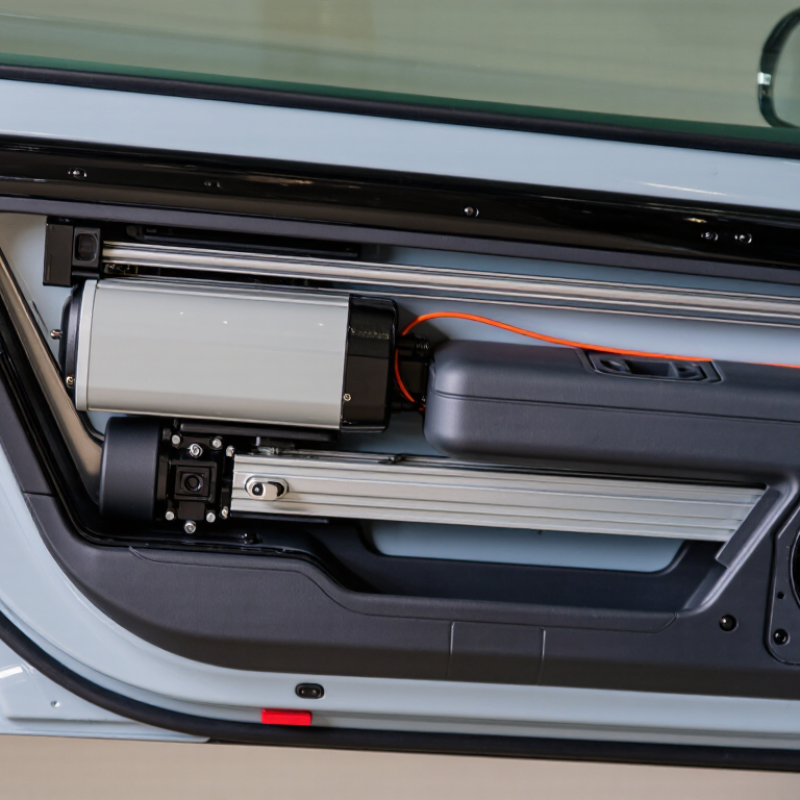
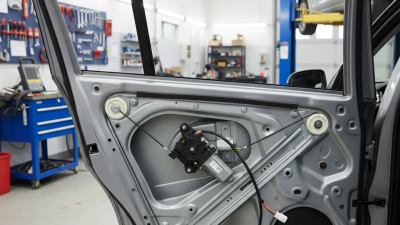
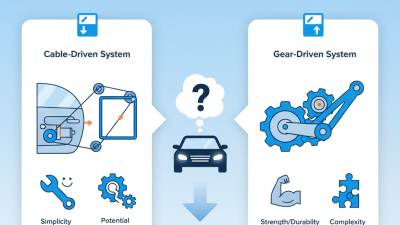
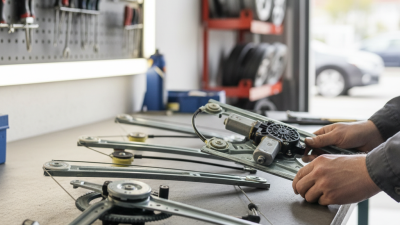
A power window assembly is the mechanism that moves a vehicle’s side glass up and down. It typically includes an electric motor, a regulator, guide tracks, and mounting points connected to the glass. Some designs use crossing metal arms; others pull the glass with a cable. The layout varies by vehicle.

Here is how it works. Pressing the switch completes an electrical circuit and powers the motor. The motor turns the regulator, which raises or lowers the glass along its tracks. Reversing the motor’s direction changes the window’s travel. The glass should move steadily, without tilting or scraping. Small details matter.

A worn cable, dry guide, or misaligned track can cause slow movement, clicking, or a window that drops unevenly. A struggling motor is not always the cause; added friction can strain it. Some systems also use pinch protection to stop or reverse the glass when resistance is detected, though features vary. The mechanism is straightforward, but not foolproof. Water and dust can still affect moving parts. That is easy to overlook. When diagnosing a fault, note where the glass stops and whether the sound changes; these clues can help distinguish an electrical problem from a mechanical one.

How Power Window Assemblies Are Designed and Manufactured

A power window assembly must lift glass smoothly while fitting inside a narrow, wet, vibrating door cavity. Engineers coordinate the regulator, motor, guides, seals, wiring, and anti-pinch controls. Small details matter. Rail geometry affects friction; even slight misalignment can cause slow travel or rattling. NHTSA’s Federal Motor Vehicle Safety Standard No. 118 sets requirements for power-operated window systems, so safety behavior must shape design from the start.

Manufacturing typically combines stamped or formed metal rails, molded carriers, cables or scissor linkages, and compact geared motors. Workers or automated stations position components, route cables, secure fasteners, and connect electrical parts. Each assembly needs checks for glass travel, current draw, noise, and resistance to repeated operation. The OICA 2023 production statistics recorded about 93.5 million motor vehicles produced worldwide. That scale makes repeatable tooling and traceable quality checks essential, though vehicle production totals are not window-assembly counts.

Validation includes endurance cycling and tests under changing voltage, temperature, vibration, and moisture. Assemblies are also checked for obstruction response and smooth movement across the glass path. A cable that looks correctly seated may still slip under load. That is easy to miss. Designers must balance low cost, quiet operation, serviceability, and reliable safety performance; no single test captures every real-world door condition.

Key Standards and Technologies Shaping the Industry

Power window assemblies must combine smooth movement with reliable obstruction detection. Manufacturers commonly work within automotive quality systems such as IATF 16949, which support controlled production and traceability. Functional safety methods, including ISO 26262 where applicable, help teams assess electrical and software-related risks. Exact obligations vary by market and vehicle design.

Regional requirements matter. Teams need to verify current rules rather than assume one test plan fits every vehicle.

Hall-effect position sensors can track motor movement, while current sensing helps detect unusual resistance. Together, they can support anti-pinch control, but calibration remains critical: seals, guides, and cold-weather friction can change operating loads.

Small details matter. Communication over vehicle networks such as LIN or CAN also requires careful diagnostics and electromagnetic compatibility checks.

Validation should include repeated cycles, temperature changes, vibration, and water exposure around connectors. Not every laboratory test predicts daily use.

A persistent challenge is balancing fast closing, quiet operation, low power draw, and dependable pinch protection without treating any single performance target as sufficient.

Leading Power Window Assembly Manufacturers Worldwide in 2026

Leading Power Window Assembly Manufacturers Worldwide in 2026

Leading power window assembly manufacturers in 2026 compete on quiet operation, reliable anti-pinch response, and consistent fit across vehicle platforms. Their products combine motors, regulators, cables or lift arms, switches, and control electronics. OICA reported approximately 93.5 million motor vehicles produced worldwide in 2023, a scale that supports demand for dependable, high-volume components. Still, production volume alone does not identify a strong supplier. Buyers also assess testing methods, regional manufacturing capacity, traceability, and performance across temperature and vibration cycles. Small details matter.

Electrification is reshaping these requirements. The International Energy Agency’s Global EV Outlook 2024 reported nearly 14 million electric car sales in 2023, representing about 18% of global car sales. That shift can increase demand for efficient motors and integrated door electronics, though power-window specifications still vary by vehicle design. In supplier evaluations, teams should compare cycle-life results, noise levels, pinch-detection consistency, and service-part availability. Ask for test conditions, not just headline figures. Data can be incomplete, and supplier claims may not reflect real-world wear. A careful review of samples, validation records, and production controls offers a more useful picture of manufacturing capability.

2026 Top Power Window Assembly Manufacturers Worldwide - Leading Power Window Assembly Manufacturers Worldwide in 2026

Manufacturing Region Common Assembly Types Typical Components and Processes Vehicle Programs Served Manufacturing and Supply-Chain Characteristics
East Asia Cable-drive and gear-driven regulators; front- and rear-door assemblies Electric motors, regulator mechanisms, rails, cables, pulleys, brackets, and door-module integration Passenger cars, crossovers, commercial vehicles, and electric vehicles Automotive component production is supported by established vehicle-manufacturing and electronics supply chains. Assemblies are generally engineered to vehicle-specific door designs.
China Cable, scissor, and other electric regulator configurations; integrated door systems Motor and regulator assembly, stamped or formed metal parts, plastic components, wiring, and functional testing Domestic and export-market passenger vehicles, including battery-electric models A large vehicle-production base supports local sourcing of automotive components. Specifications and validation requirements vary by vehicle platform and destination market.
Europe Cable-drive, rail-guided, and compact regulator assemblies; module-ready designs Regulators, motors, position-related components, mounting hardware, and end-of-line operational checks Passenger cars, premium vehicles, vans, and light commercial vehicles Production is linked to multi-country automotive supply chains. Suppliers typically work to vehicle-maker requirements for durability, noise, fit, and traceability.
North America Electric cable and scissor regulators; service and replacement assemblies Motors, regulator mechanisms, stamped brackets, cables, and assemblies designed for specific door structures Passenger vehicles, pickups, SUVs, and light commercial vehicles Manufacturing and distribution serve both original-equipment and aftermarket channels. Vehicle-platform variety creates demand for numerous fit-specific configurations.
India and South Asia Electric and manual regulators, with configurations matched to local vehicle platforms Regulator mechanisms, motors for powered systems, rails, cables, brackets, and assembly-level inspection Passenger cars, utility vehicles, and commercial vehicles Local vehicle production and regional sourcing support component manufacturing. Product mix can include both powered and manually operated window systems.
Southeast Asia Electric regulator assemblies and components for locally built and exported vehicles Motors, cables, rails, pulleys, metal brackets, and subassemblies for door-module production Passenger cars, multipurpose vehicles, pickups, and light commercial vehicles Regional automotive plants participate in cross-border production networks. Component sourcing and assembly specifications depend on the vehicle program.

Note: This is a qualitative overview of regional manufacturing activity and common product capabilities, not a ranked list or a company-specific market-share dataset. Power window assembly designs and sourcing arrangements vary by vehicle platform.

How to Compare Manufacturers by Products, Markets, and Capabilities

Comparing power window assembly manufacturers starts with the mechanism, not the catalog headline. Check whether each supplier offers cable-driven, scissor-type, or integrated motor-and-regulator assemblies. Ask for drawings showing mounting points, connector positions, travel range, and anti-pinch options. Small differences matter. A connector shifted by a few millimeters can complicate installation on an existing door line.

Product breadth is useful only when it matches the target vehicle and service environment. A manufacturer serving passenger cars may have different validation experience from one supplying commercial vehicles or replacement channels. Review operating-temperature ranges, cycle-life test conditions, corrosion protection, noise limits, and sample inspection records. Compare like with like: a cycle result means little without its load, speed, and test setup. Documentation should identify revisions and traceability.

Capabilities include more than production volume. Ask how tooling changes are managed, how prototypes are sampled, and how defects are contained before shipment. Request evidence such as process flows, inspection checkpoints, and corrective-action examples. Site audits and pilot builds can expose practical gaps, but they take time and may not reveal every weakness. No scorecard is perfect. Weigh fit, quality consistency, communication, and delivery stability against your program’s needs rather than choosing on price alone.

2026 Top Power Window Assembly Manufacturers Worldwide

How to compare manufacturers by products, markets, and capabilities

Vehicle production provides context for the scale of automotive manufacturing markets, but it is not a ranking of power window assembly suppliers or a direct measure of demand. Compare suppliers separately on product range (such as regulators, motors, and complete assemblies), regional coverage, and engineering and manufacturing capabilities.
Source: OICA, 2023 production statistics. Values are millions of vehicles, rounded to two decimal places.