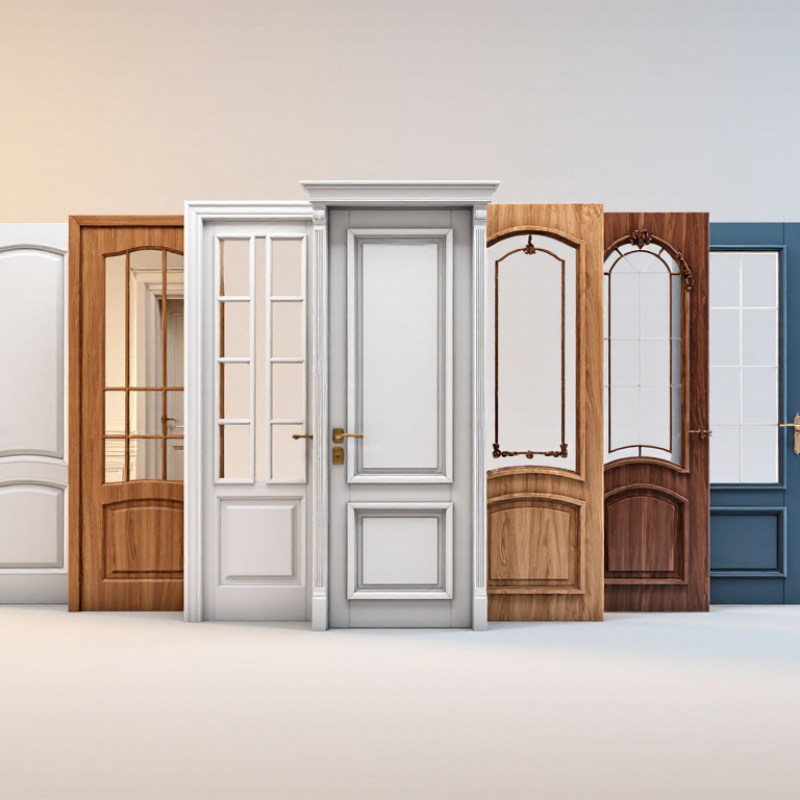
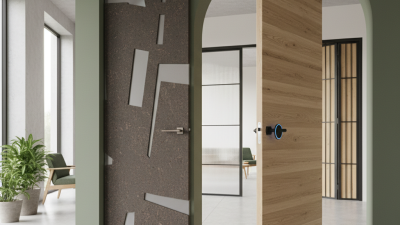
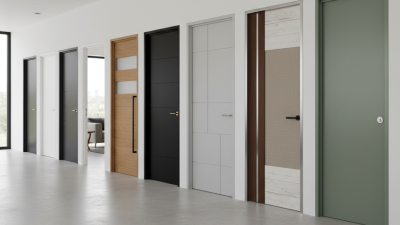
An Interior Panel Door can change the feel of a room before anyone notices its hardware. Raised profiles catch the morning light. A painted finish can soften a hallway, while a wood-grain surface adds warmth beside a plain wall. Small details matter.
Architect Louis Sullivan’s principle, “form ever follows function,” offers a useful lens for comparing door makers. For panel doors, appearance must work alongside practical details: panel construction, finish consistency, frame fit, and hardware compatibility. A handsome sample is only part of the story. Installation conditions and maintenance needs matter, too.
This guide examines ten Interior Panel Door manufacturers in China, looking at product range, materials, customization, production information, and support for buyers. The comparison can help importers, builders, and homeowners prepare sharper questions before requesting samples or quotations. Yet no list can replace a factory review. Catalog images may hide uneven joints or color differences between batches. Ask for current specifications, finish samples, and clear lead-time details. Check them carefully.
There is no single best door for every project. A cost-effective option may suit a rental renovation, while a custom profile may better fit a detailed residential interior. This overview aims to make those trade-offs easier to see, not to promise a perfect choice. Some details will still need closer verification.
Interior Panel Doors: Main Types, Materials, and Applications
Interior panel doors combine a frame with one or more infill panels. Raised-panel designs add depth and suit traditional rooms, while flat-panel and Shaker styles offer cleaner lines. Flush doors have a smooth face, making them practical for simple interiors and narrow hallways. Some designs include glass panels to share daylight between rooms. Small details matter: a heavy solid-wood door can feel substantial, but it may be less forgiving when indoor humidity changes.
Common materials include solid wood, wood veneer over an engineered core, medium-density fiberboard (MDF), and particleboard. Solid wood offers visible grain and can be refinished, while engineered cores often provide more consistent surfaces. The USDA Forest Products Laboratory’s Wood Handbook explains that wood responds to moisture, so fit and finish deserve attention in damp or seasonally variable spaces. For composite-wood components, the U.S. EPA’s TSCA Title VI limits formaldehyde emissions to 0.11 parts per million for MDF and 0.09 for particleboard. These figures help buyers compare specifications, but they do not replace checking a product’s documentation. Bedrooms and offices often use opaque panels for privacy; glazed panels can suit shared living areas. Bathrooms need suitable finishes and ventilation. One easy detail to overlook: even a well-made door can stick if its frame is poorly aligned.
Common nominal thicknesses vary by market and application. These examples show typical product dimensions, not brand data or universal requirements.
Assessing interior panel door manufacturers in China starts with a clear specification, not a polished catalogue. Define the door’s dimensions, panel profile, core construction, finish, hardware preparation, and intended room conditions. Request a production sample and check its weight, edge quality, joint consistency, and surface finish in daylight. Small defects show up there.
Ask how the factory controls moisture, dimensions, and finish quality across full production runs. Request inspection records and written tolerances, then compare them with your own requirements. A sample cannot prove every production batch will match. No checklist is perfect. Ask how rejected doors are recorded and corrected, rather than relying only on verbal assurances. If practical, arrange an independent inspection before shipment.
Review packaging details, delivery timelines, and the process for handling damaged goods. Ask for photos of doors packed for transport and confirm that corners and edges receive suitable protection. Check whether the manufacturer can provide consistent updates and respond clearly to technical questions. I may give too much weight to documentation; factory communication and physical workmanship matter too. A showroom can distract. Compare several suppliers against the same written criteria, and note any unanswered questions before placing an order.
These ten profiles compare Chinese interior panel door manufacturers by production focus, material choices, and project fit, not by an unsupported ranking. They cover solid-wood makers, engineered-core producers, molded-panel lines, veneer specialists, and paint-free surface manufacturers. Other profiles represent custom-size workshops, apartment-project suppliers, acoustic-door producers, export-oriented factories, and integrated door-and-hardware plants. Details matter.
China’s National Bureau of Statistics reported that completed building floor area reached 998.31 million square metres in 2023, up 17.0% year on year. This is a housing-market indicator, not a direct measure of door sales, but it helps explain demand for interior finishing products. Buyers should compare core construction, panel thickness, edge sealing, finish consistency, and documented moisture-control procedures. Ask for a cutaway sample. Check how the surface looks under side lighting, where uneven veneer or paint can show. Trade-offs remain: custom sizing may extend lead times, while economical molded panels may offer fewer finish options. Factory claims are not always easy to verify; sample testing and clear written specifications make these profiles more useful than catalog language alone.
The profiles below summarize common interior panel door product and manufacturing categories. They are anonymized, representative profiles—not verified company-specific records or a ranking of named manufacturers. Product specifications, certifications, and performance ratings should be confirmed with each supplier.
| Profile | Typical Product Focus | Common Construction | Finish Options | Typical Applications | Key Evaluation Point |
|---|---|---|---|---|---|
| Profile 1 Engineered flush-panel specialist |
Plain and lightly paneled interior doors | Engineered wood frame or core with wood-based door skins | Wood veneer, laminate, or paint | Apartments, homes, and general interior projects | Core composition, flatness, and finish consistency |
| Profile 2 Molded-panel door producer |
Embossed, multi-panel door designs | Molded fiberboard door skins assembled with a frame or core | Primed, painted, or laminated surfaces | Residential developments and standard interior replacements | Panel definition, edge quality, and resistance to surface damage |
| Profile 3 Solid-wood panel workshop |
Traditional framed doors with raised or flat panels | Timber stiles and rails with solid-wood or engineered panels | Clear coat, stain, or opaque paint | Custom homes, villas, and renovation projects | Timber species, moisture control, joinery, and dimensional stability |
| Profile 4 Apartment-project supplier |
Standardized interior door sets for multi-unit projects | Engineered wood components with coordinated frames and architraves | Melamine, laminate, veneer, or paint | Apartments, serviced residences, and housing projects | Batch consistency, delivery planning, and complete door-set coordination |
| Profile 5 Commercial door-set producer |
Panel doors configured for commercial interiors | Engineered door leaf with specified frame, seals, and hardware preparations | Durable laminate, veneer, or painted finish | Offices, education, hospitality, and other commercial spaces | Confirm project requirements and test evidence for the complete assembly |
| Profile 6 Moisture-conscious interior door maker |
Interior doors intended for areas with occasional humidity | Moisture-resistant wood-based components and sealed edges, depending on specification | Sealed paint or laminate surfaces | Bathrooms and utility areas where product suitability is confirmed | Ask for documented humidity limits; “moisture-resistant” does not mean waterproof |
| Profile 7 Acoustic door specialist |
Panel doors designed to help reduce sound transmission | Dense or multi-layer leaf construction with perimeter seals where specified | Paint, veneer, or laminate | Meeting rooms, hotels, studios, and private rooms | Verify laboratory sound-rating reports for the complete installed door set |
| Profile 8 Custom architectural door maker |
Made-to-order panel profiles, dimensions, and detailing | Timber or engineered wood construction tailored to the project specification | Custom veneer matching, stain, paint, or specialty finishes | High-end residential and architectural fit-out projects | Shop drawings, sample approval, tolerances, and finish matching |
| Profile 9 Contemporary panel-door producer |
Minimalist doors with subtle grooves or clean panel geometry | Engineered wood leaf with machined or applied surface detailing | Matte paint, textured laminate, or veneer | Modern homes, apartments, and contemporary interiors | Groove alignment, color consistency, and hardware compatibility |
| Profile 10 OEM and export-oriented supplier |
Configurable panel doors produced to buyer specifications | Construction varies by order, market requirements, and approved drawings | Buyer-selected veneer, laminate, paint, or other specified finish | Importers, distributors, and project-based purchasing | Confirm destination-market standards, packaging, documentation, and lead time |

Comparing ten interior panel door manufacturers in China calls for more than attractive catalog images. Product ranges may cover flush, molded, veneered, and solid-core doors, but availability varies by factory. Check whether standard sizes suit your project or require special production. Small details matter. Ask for a sample showing the actual panel profile, finish, edge treatment, and hardware preparation.
Customization can include dimensions, surface colors, veneer patterns, glazing, and frame options. Confirm what is made in-house and what is sourced from other suppliers. This affects consistency and lead time. Request written specifications and a sample approval process before placing a large order. A finish can look different under warm showroom lights. That is easy to overlook.
Quality comparisons should examine more than a certificate or stated standard. Ask how each manufacturer checks moisture, panel flatness, bonding, and surface defects. Review inspection records where available, and verify that any claimed ratings match the intended use and destination-market requirements. Check tolerances on a finished door, not only a drawing. I would also compare packaging and damage procedures; these are often treated as minor, yet they can weaken an otherwise careful quality process. No single metric tells the whole story.
When comparing interior panel door manufacturers in China, look beyond catalog photos. Ask whether the factory makes the door leaf, frame, and panels in-house or relies on subcontractors. The answer affects lead times and consistency. Request a sample with the proposed core, veneer or finish, and edge treatment. Check it in natural light. Small color differences can become obvious across a large order.
Confirm technical details in writing: dimensions, panel profile, core construction, moisture limits, hardware preparation, and acceptable surface defects. A useful supplier can explain how these choices affect weight, stability, and price. Ask for inspection records and a clear description of checks performed before packing. A polished certificate alone is not enough. Review what it actually covers, and whether it applies to the product you are buying.
Communication deserves a practical test. Send a drawing with an unusual opening size, then see whether the reply identifies missing measurements or simply quotes a price. That small exchange can reveal how project changes will be handled. Compare production schedules, packaging for long-distance shipping, replacement procedures, and payment milestones. Be cautious of promises that sound effortless. Even careful factories can face delays, and a detailed agreement will not prevent every defect—but it makes problems easier to address.