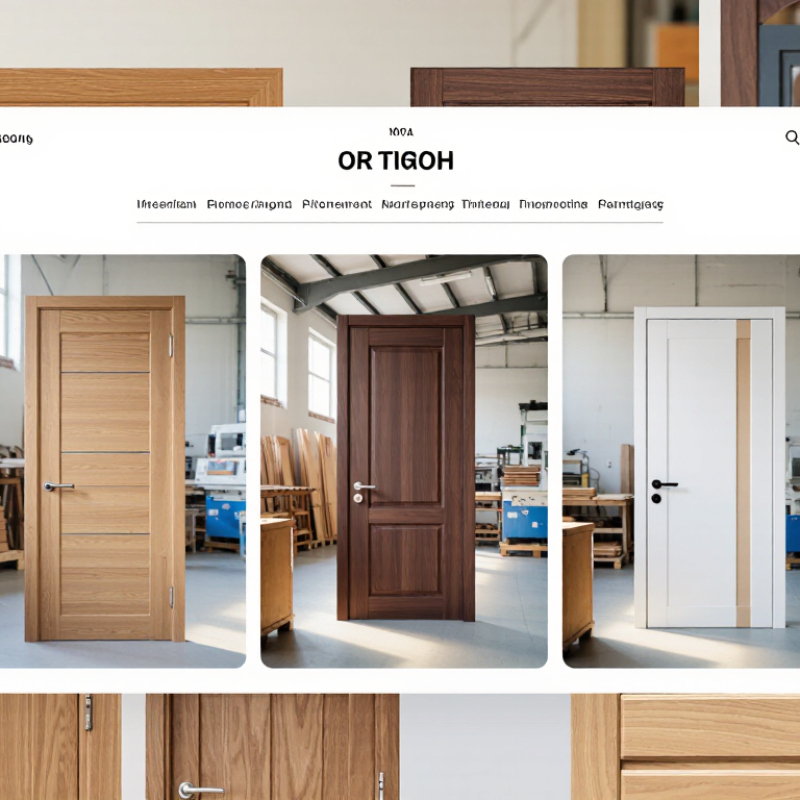
Choosing an Interior Panel Door manufacturer in China takes more than comparing catalog photos and quoted prices. Buyers need to understand how each supplier handles materials, construction, finish consistency, and customization. A door may look convincing in a showroom, yet perform differently after installation. Small details matter.
This guide introduces manufacturers and the practical questions worth asking before requesting a quotation. Compare core specifications, including panel design, frame construction, surface finish, dimensions, and available hardware. Ask whether the quoted product is solid wood, engineered wood, or another stated material. Request clear product documentation, recent sample photos, and, where possible, a physical sample. These checks help separate a detailed proposal from a vague sales pitch.
No shortlist is perfect. Supplier capabilities, lead times, and quality controls can change, so confirm important details directly rather than relying on a directory or promotional claim. Discuss packaging, production scheduling, inspection procedures, and how changes are recorded. A polished sample is useful, but it cannot answer every question about repeat orders. That deserves attention. The right partner should explain limitations as clearly as strengths. This article offers a grounded starting point for evaluating China-based manufacturers, comparing their product ranges, and deciding which questions deserve answers before you commit.
An interior panel door is an indoor door built around a frame, or “skeleton,” with one or more panels fitted between its stiles and rails. The panels may be flat, recessed, or raised, creating different profiles and shadow lines. Some doors use solid timber; others combine engineered wood, MDF, or veneer. The choice affects weight, surface appearance, and response to changes in humidity.
Manufacturing begins with cutting the frame pieces and panels to size. Workers form joints, assemble the stiles and rails, and secure the panels within the frame. Adhesive and pressure help keep the structure square while it sets. Then comes sanding. Edges and faces are checked before paint, lacquer, or veneer is applied. Small details matter: a slightly uneven joint can show clearly under a glossy finish.
Quality checks often include measuring the door, inspecting its surface, and testing how it fits a sample frame. Not every production line uses the same materials or steps, so buyers should ask about the core, finish, and moisture control. A smooth face is not the whole story. Humidity still matters, and installation conditions can affect how a door performs. Even careful manufacturing cannot prevent every fitting issue.
| Door Type | What It Is | Common Materials | Typical Construction | Common Applications | Key Manufacturing Steps | Quality Checks |
|---|---|---|---|---|---|---|
| Molded hollow-core panel door | A lightweight interior door with a molded face that may imitate traditional recessed panels. | Molded hardboard or medium-density fiberboard (MDF) skins; timber or composite perimeter frame; paper honeycomb or similar lightweight core. | Thin formed skins are bonded to a light core and frame. The core supports the faces while keeping the door relatively light. | Bedrooms, closets, and other interior locations where a lightweight, economical door is suitable. | Form or press the face skins; cut and assemble the frame; add the core; apply adhesive; press the door; trim and finish. | Check overall dimensions, face bonding, surface defects, edge integrity, and hinge and lock preparation. |
| Solid-core engineered panel door | A heavier panel door made with a dense or composite core and finished faces. | Composite or particleboard core; MDF or veneer faces; timber lippings or edge strips. | A continuous, dense core provides more mass than a hollow-core design. The surface may be flat or routed to create panel details. | Interior rooms where a more substantial feel or improved sound reduction than a lightweight hollow-core door is desired. | Prepare the core and faces; apply adhesive; press the door; machine panel details if required; finish edges and surfaces; drill hardware locations. | Check flatness, thickness, core and face bonding, edge coverage, surface finish, and hardware dimensions. |
| Stile-and-rail panel door | A traditional construction in which vertical stiles and horizontal rails form a frame around one or more panels. | Solid wood or engineered timber members; solid wood, plywood, or MDF panels. | Panels are fitted into grooves in the frame. Depending on the design, panels may be allowed to move slightly within the frame as humidity changes. | Interior spaces where a defined panel appearance is preferred, including residential and commercial settings. | Cut and shape stiles and rails; machine joints and panel grooves; size the panels; assemble the frame; sand and apply the selected finish. | Check joint fit, frame squareness, panel fit, moisture condition, finish consistency, and smooth operation. |
| MDF panel door | A door made wholly or partly from MDF, which has a smooth, uniform surface suited to paint and machined details. | MDF; primer or paint; optional timber reinforcement at hardware locations. | May be a routed single-piece slab or a framed construction with separate panel components. Construction depends on the design and intended use. | Painted interior applications where a smooth face and consistent appearance are important. | Condition and cut the board; machine profiles or panel details; seal edges; sand; apply primer and finish coats; prepare hardware locations. | Check edge sealing, surface smoothness, coating coverage, dimensions, and resistance to handling damage. |
| Veneered engineered-wood panel door | An engineered door finished with a thin layer of natural wood veneer for a wood-grain appearance. | Engineered core; natural wood veneer; adhesive; protective clear finish. | Veneer is bonded to the door faces, with grain matching and edge treatment selected to suit the design. | Interior spaces requiring a natural wood appearance with an engineered construction. | Prepare and balance the core; select and lay up veneer; bond under pressure; trim and sand; apply stain or clear coating as specified. | Check veneer adhesion, grain and color consistency, surface defects, edge finishing, and door flatness. |
| Solid-wood panel door | A door made mainly from solid timber, either as a framed panel design or as a solid-board construction. | Solid timber selected for the intended appearance and use; compatible adhesives and finish materials. | Timber components are machined and assembled. Wood movement with changes in humidity must be considered in the design. | Interior settings where natural timber character is desired and the project allows for the door’s weight and maintenance needs. | Condition timber; machine components; form joints and panels; assemble; sand; apply stain, oil, varnish, or paint as specified. | Check moisture condition, joint strength, panel movement allowance, straightness, finish, and hardware fit. |
| Manufacturing note: Materials, core designs, finishes, dimensions, and performance vary by product and market. Confirm applicable fire, acoustic, environmental, and building-code requirements for the intended project; these properties should not be assumed from door type alone. | ||||||

China’s interior panel door industry sits within a large, material-intensive furniture sector. The China National Furniture Association’s 2023 industry review, based on National Bureau of Statistics data, reported revenue of 655.7 billion yuan for above-designated-size furniture manufacturers, down 4.4% year on year. This is useful context, not a door-market measurement. It does not reveal how much revenue came from panel doors.
The supply chain draws on wood-based panels, veneers, coatings, hardware, and engineered cores. FAO’s 2023 Forest Products Facts and Figures identifies China as the world’s leading producer of wood-based panels, a foundation for many interior door products. Production ranges from standard flush panels to routed designs with recessed profiles. Factory checks may include panel thickness, edge bonding, surface finish, and moisture stability. Small defects matter. A clean-looking face can still hide a weak joint.
Manufacturers also face pressure to balance customization with repeatable quality. Buyers often request matching finishes across doors, wardrobes, and wall panels, yet color can shift between production batches. That is not always a factory failure; lighting and substrate differences can change how a finish appears. Industry statistics rarely separate interior doors from broader furniture categories, so claims about market size deserve caution. Better comparisons examine documented test methods, material specifications, lead times, and sample consistency—not catalogue photos alone.
When evaluating Chinese interior panel door manufacturers, look beyond catalog photos. Ask for door-leaf cross-sections, core material specifications, finish samples, and measured tolerances. A smooth showroom panel can hide uneven edge banding. Request a sample made with the same core, finish, and hardware planned for production. Small detail. Check whether the supplier can explain moisture control, panel flatness, and adhesive choices clearly. Their answers should match written specifications, not shift between sales calls.
Production consistency matters as much as design. Review inspection records, reject-rate definitions, and packaging tests for corner impact and surface abrasion. If possible, inspect a pilot batch under neutral lighting; gloss and grain can look different in photos. Confirm capacity against your order size and schedule, then ask how revisions are documented. Clear revision control helps prevent an approved drawing from becoming outdated. Still, paperwork is not proof by itself.
Assess communication and after-sales handling before placing a large order. Ask who manages corrective actions, how replacement panels are tracked, and what evidence supports a claim. Compare lead times, sample costs, warranty terms, and shipping protection in writing. A factory may perform well with one finish and struggle with another. That distinction is easy to overlook. A small, representative trial order can reveal useful details, though one batch cannot expose every production risk.
Profiles of leading interior panel-door manufacturers in China are most useful when they compare capabilities, not just catalogues. Integrated producers control timber processing, panel pressing, finishing, and assembly under one roof. Their advantage is tighter control over dimensions and surface consistency. Specialist factories may offer more flexibility in veneer, paint, and routed-panel designs, but buyers should check how they manage batch color matching.
China’s National Bureau of Statistics reported 998.31 million square metres of completed building floor area in 2023, up 17.0% year on year. This indicates a large renovation and fit-out context, but it is not a direct measure of door sales. That proxy is imperfect.
China Customs’ HS 441820 trade series tracks wooden doors, yet does not distinguish panel styles. A credible supplier profile should therefore include factory capacity, moisture-control practices, hardware options, and documented inspection procedures.
Ask for a sample under neutral light. Check edge seams and finish near the hinge recess. Small flaws show quickly. Supplier claims still need independent verification.
Compare interior-panel door suppliers by evidence, not showroom polish. China recorded 724.3 million square metres of completed residential floor area in 2023, up 17.2% year over year (National Bureau of Statistics, 2024). That scale makes capacity claims easy to hear—and worth checking. Ask for a current production schedule, monthly output by door type, and recent export references. Give each bidder the same specification: core material, panel thickness, finish, moisture tolerance, hardware, packaging, and dimensional limits. Then compare like with like.
Inspect a sample under side lighting; pinholes, uneven sheen, and loose edge bands show quickly. Ask how the factory controls humidity and records batch inspections. UNEP and GlobalABC’s 2023 Global Status Report attributes 37% of global energy- and process-related CO₂ emissions to buildings in 2022. Request material-origin and emissions documents where available. Verify test reports against the exact construction offered, not a similar model. Check lead-time assumptions, replacement-part access, and responsibility for rework. No checklist is perfect. I still value a clear, written answer about defects more than polished promises.
Maximum formaldehyde emissions for common composite wood panel types. Lower limits mean stricter emissions thresholds.
Limits shown in parts per million (ppm): hardwood plywood, 0.05; particleboard, 0.09; MDF, 0.11; thin MDF, 0.13. When comparing suppliers, ask for current test documentation for the specific panel material used in the door. These are regulatory limits, not measured results for individual products.