How to Choose the Right Air Grille Shutter in 2026?
Choosing the right Air Grille Shutter in 2026 requires more than matching a frame to a wall opening. It affects airflow, comfort, noise, maintenance, and energy use. The International Energy Agency’s Energy Efficiency 2024 report identifies buildings as responsible for roughly 30% of global energy demand. The 2024 Global Status Report for Buildings and Construction reports that buildings and construction account for about 32% of energy use and 34% of global carbon emissions. Small components matter.
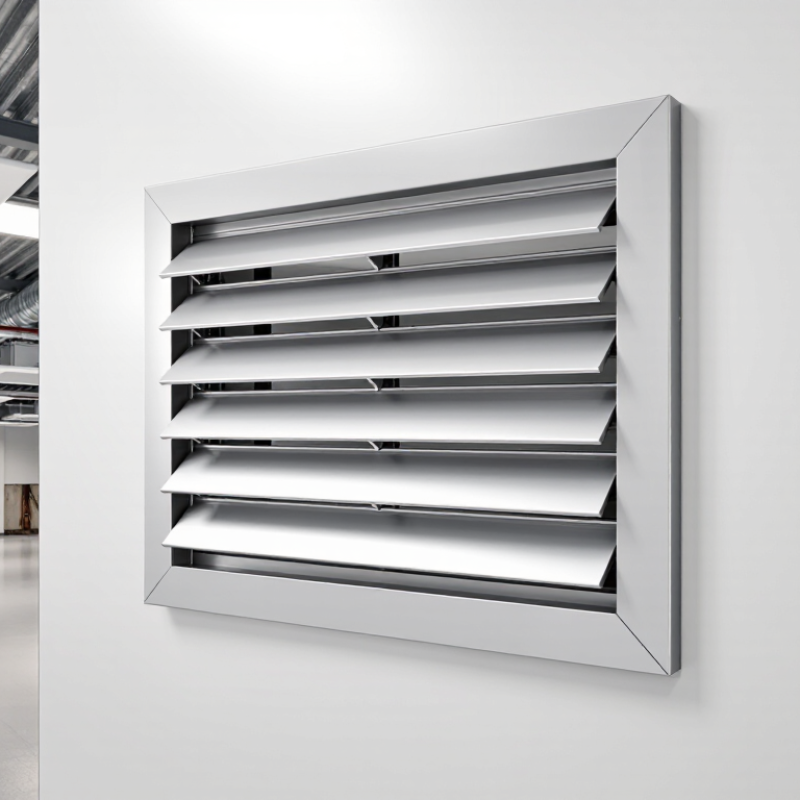
A suitable shutter should match the system’s airflow volume, static pressure, room function, and installation environment. Review the grille’s free area, blade angle, pressure drop, throw pattern, and sound rating. ASHRAE Standard 62.1 supports ventilation planning, while Standards 55 and 90.1 address comfort and building energy performance. These standards do not select a product for you. They provide a disciplined basis for comparison. A hospital corridor may need quiet, cleanable aluminum construction. A humid coastal facility may require stronger corrosion resistance. A warehouse may prioritize high-volume air distribution and easy access.
Do not assume a tighter shutter always performs better. Excessive resistance can increase fan energy and create unwanted noise. Decorative blades may also restrict airflow more than expected. This is where many specifications become too general. Ask suppliers for tested performance data, not only attractive product photos. Confirm dimensions, adjustment range, finish durability, cleaning access, and compatibility with dampers or filters. Fire and smoke control requirements need separate verification by qualified professionals. The right Air Grille Shutter is the one that performs predictably after installation, not merely the one that fits the drawing.
Define Airflow Needs Using ASHRAE 62.1 Ventilation Rates
Choosing an air grille shutter starts with ventilation demand, not appearance. ASHRAE Standard 62.1 defines outdoor-air needs by occupancy, floor area, and space type. It also considers breathing-zone conditions and system ventilation efficiency. Confirm the current edition and local requirements with a qualified mechanical engineer. A classroom, office, and laboratory rarely need identical airflow. Record occupants, room volume, operating hours, and exhaust conditions. Small errors matter.
Use the calculated zone airflow to estimate grille airflow and face velocity. Then check free area, pressure drop, air throw, and sound levels in the technical data. A restrictive shutter can cause whistling, drafts, or uneven distribution. Adjustable blades help when balancing conditions change, but they cannot correct undersized ductwork. Field measurements with a calibrated hood or anemometer can expose gaps between design and operation. Design assumptions are not always right.
Tips: Keep a room-by-room airflow schedule. Mark supply and return grilles on the plan. Ask for tested pressure-drop data, not only a maximum airflow figure. Leave access for cleaning and future balancing. Check whether furniture, partitions, or lighting will block the discharge pattern. Recheck occupied spaces after installation. A quiet grille may still deliver insufficient outdoor air. Consider comfort, compliance, and maintainability together.
Compare Free Area, Face Velocity, and Pressure Drop Under AMCA 500-L
How to Choose the Right Air Grille Shutter in 2026?
Free area, face velocity, and pressure drop should be reviewed together, not separately. Under AMCA 500-L, air performance testing measures airflow, velocity, and resistance under controlled laboratory conditions.
A grille with 60% free area may reduce turbulence, but its tested pressure drop still matters. For example, 1,000 cfm through 2.5 square feet creates a 400 fpm face velocity. That number helps, but it does not replace the manufacturer’s AMCA test curve.
ASHRAE Handbook—HVAC Systems and Equipment, 2024
recommends evaluating air distribution with room comfort, noise, and system resistance in mind.
A high face velocity can increase noise and throw distance. Excessive pressure drop can also raise fan energy.
The U.S. Department of Energy’s fan efficiency guidance links lower system resistance with reduced operating energy, although grille selection alone cannot guarantee savings. Small details matter. Shutter angle, blade spacing, and mounting depth can change the measured result.
Tips:
Ask for the tested free-area percentage and pressure-drop data at your actual airflow. Check whether values were measured under AMCA 500-L conditions. I would also compare the grille at 300, 400, and 500 fpm, rather than selecting one convenient point. A visually open grille may still perform poorly when dusty or partially blocked. My own early selections sometimes relied too heavily on free area; that shortcut deserves a second review.
Match Materials to Indoor and Outdoor Corrosion Exposure Categories
How to Choose the Right Air Grille Shutter in 2026?
Choosing the right air grille shutter in 2026 starts with exposure, not appearance. Indoor grilles usually face stable humidity, dust, and cleaning chemicals. Powder-coated aluminum often suits offices, schools, and residential corridors. Galvanized steel can work in dry service areas, but damaged coatings may rust quickly. Look beyond the finish. Inspect edges, hinges, screws, and blade joints, where corrosion often begins.
Outdoor conditions require a stricter material decision. Coastal air carries salt that attacks ordinary steel and weakens protective coatings. Stainless steel or suitably treated aluminum is more reliable near shorelines. Industrial sites may expose shutters to acidic gases, solvents, or constant moisture. In these areas, confirm the coating system, fastener grade, drainage design, and maintenance access. A grille can look excellent during installation and still fail after one wet season. Exposure categories should come from the site, not a generic product table.
Tips:
Record humidity, salt, pollutants, and cleaning agents before selection. Ask for coating thickness and corrosion-test evidence. Check whether dissimilar metals touch each other. Test a sample outdoors when the environment is uncertain. Salt air is unforgiving. I would also review the specification after installation, because real airflow, splash water, and maintenance habits may differ from the original plan. No material choice is perfect.
Verify Noise Targets of NC 25–35 and Energy Criteria in ASHRAE 90.1
How to Choose the Right Air Grille Shutter in 2026?
An air grille shutter can look efficient while creating unwanted noise. Its real performance depends on airflow, pressure drop, blade geometry, and installation quality. Start by confirming the room’s noise target, usually NC 25–35.
NC 25 suits bedrooms, libraries, and quiet offices. NC 35 may fit corridors or general workspaces. Small difference. Yet occupants notice it.
Request octave-band sound data at the design airflow, not only a single sound-power value. Compare discharge noise, regenerated noise, and pressure loss. A low-noise shutter can still fail when the system operates above its rated airflow.
Check the free-area ratio and avoid selecting only by face size. Larger face dimensions may reduce velocity. They do not automatically eliminate turbulence.
Energy compliance requires a wider review. ASHRAE 90.1 addresses HVAC efficiency, fan power, controls, and related system performance. Verify that the shutter’s pressure drop supports the project’s fan-energy target.
Review leakage behavior when the damper is closed or modulated. Confirm actuator control, minimum airflow, and access for testing.
Field inspections often reveal loose frames, blocked paths, or incorrect blade settings. These details can raise noise and energy use.
No selection is perfect. I would document the assumptions, then retest airflow and sound levels after installation.