Choosing the right Door Window Motor is more than matching a part number. It affects comfort, safety, noise, and long-term vehicle reliability. A weak motor may struggle with a frozen window, produce uneven movement, or stop halfway through the glass travel. These problems often appear after installation, when returning the part becomes costly and frustrating.
Automotive mechatronics engineer Michael J. Neale offers a practical reminder: “A dependable window motor must match the regulator, electrical load, and real driving conditions.” That principle guides this article. The ten tips examine motor compatibility, voltage, torque, gear quality, connector design, noise levels, thermal protection, and warranty support. Each point connects technical specifications with workshop experience. A motor that looks identical may still have different mounting holes or wiring polarity. Small details matter.
Check the original assembly carefully. Measure twice.
Reliable selection also requires attention to the vehicle’s age, climate, and daily use. Dust, humidity, ice, and repeated short cycles can expose weak components quickly. Buyers sometimes focus only on price. That is understandable, but incomplete. The cheapest option may use soft gears, thin wiring, or inconsistent limit control. Still, premium branding alone does not guarantee performance. This guide encourages a balanced review of evidence, supplier credibility, installation feedback, and after-sales service. Some decisions remain imperfect, especially when manufacturer data is limited. Careful comparison reduces that uncertainty and helps identify a Door Window Motor that works smoothly behind the door panel.
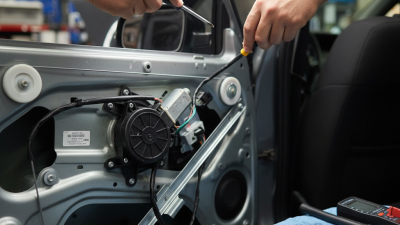
A door window motor converts electrical energy into the movement that raises and lowers vehicle glass. In workshop inspections, I check its speed, noise, wiring, and resistance before blaming the switch. A weak motor may move slowly, stop halfway, or work only after the door is tapped. That symptom matters.
Most systems use a reversible DC motor with two wires.
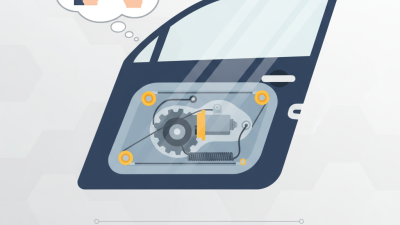
Reversing the current changes the glass direction. Some motors attach to a separate regulator, while others arrive as a complete motor-regulator assembly. Cable regulators are compact and quiet, but their cables can fray or tangle. Scissor regulators use metal arms and usually feel sturdier, although they need more space. Geared motors provide useful lifting torque. Integrated anti-pinch systems add sensors or current monitoring, improving safety around closing glass.
Check the vehicle’s voltage, mounting points, connector shape, gear position, and regulator design before choosing a replacement.
The motor must handle repeated cycles without overheating. Weather sealing also matters because moisture enters through the door panel. During testing, listen for grinding, clicking, or uneven movement. These sounds often reveal damaged gears or misaligned tracks. A motor that fits physically may still have the wrong speed or torque.
I once assumed a slow window always meant motor failure.
That was careless. Dry guides, bent channels, or low voltage can create the same result. Measure voltage under load and inspect the glass alignment. Small details often decide whether the repair lasts.
10 Tips to Choose the Right Door Window Motor
Matching the motor to your vehicle or door system is more important than choosing the highest power. Check the system voltage first, such as 12 volts for many vehicles or 24 volts for larger doors. A mismatch can cause overheating, slow movement, or early failure. Measure the available mounting space carefully. Even a few millimeters can prevent proper installation.
Compare the motor’s torque with the actual window or door weight. Friction from worn tracks also increases the required load. Check operating speed, gear ratio, shaft direction, and mounting-hole positions. For powered doors, confirm the stroke length and limit-switch arrangement. The control system must also match the motor’s wiring, polarity, and feedback signals. Keep it simple.
I once saw a replacement motor selected only by voltage. It fit the connector but lacked enough torque for the heavy glass. The motor became hot during repeated tests. That mistake was avoidable. Review the service manual, measure current under load, and test the motor through several complete cycles. Short tests can hide real problems. Pay attention to noise, vibration, and uneven travel. For outdoor doors, examine the enclosure rating and protection against moisture and dust. Leave a small safety margin, but do not oversize the motor without checking the controller. More power is not always better.
Match the motor’s voltage, torque, speed, duty cycle, mounting dimensions, feedback method, noise level, environmental protection, load direction, and safety requirements with the vehicle or door system. The chart shows representative torque and output-speed targets for common applications.
Use these values as an initial engineering reference only. Final selection should be verified against measured load, travel distance, friction, temperature, duty cycle, stall protection, and the motor supplier’s datasheet.
Choosing the right door window motor requires more than checking its fit. Power, speed, noise, and operating behavior reveal its real quality.
Tip one: Match the motor voltage with the vehicle’s electrical system. A mismatch can cause weak movement or overheating. Tip two: Check current draw under load, not only at no-load speed. Tip three: Confirm the connector, mounting points, and gear orientation before installation. Tip four: Test the motor with the actual window regulator. A motor may seem strong alone but struggle inside the door. Tip five: Compare opening and closing speed. Uneven movement often indicates poor gearing or excessive friction.
Tip six: Listen for grinding, clicking, or harsh vibration during several cycles. Quiet operation matters inside a vehicle cabin. Tip seven: Measure noise when the glass reaches its upper and lower stops. That moment exposes impact problems. Tip eight: Run repeated cycles while observing heat buildup. Excessive heat suggests inefficient operation or insufficient capacity. Tip nine: Test performance with the window partly misaligned. Real doors are rarely perfect. Tip ten: Review reliable test data covering endurance, temperature, and stall protection.
During practical inspections, I also check whether the motor starts smoothly after sitting unused. This detail is easy to miss. A brief hesitation may become a larger fault later. Do not trust speed alone. Faster movement can increase noise, current demand, and mechanical stress. I once treated a quiet motor as reliable, but its performance dropped after repeated cycles. That experience changed my testing habits. Evaluate the complete operating system, not one impressive number.
| No. | Selection Criterion | What to Check | Practical Reference | How to Evaluate It |
|---|---|---|---|---|
| 1 | Voltage Compatibility | Confirm that the motor's rated voltage matches the vehicle or equipment electrical system and that the connector and polarity are compatible. | Common automotive systems use approximately 12 V nominal voltage; the actual operating voltage can vary during starting, charging, and battery discharge. | Check the original motor label, wiring diagram, connector configuration, and the supplier's operating-voltage range before installation. |
| 2 | Lifting Power and Load Capacity | Choose a motor with enough torque to move the glass, regulator, seals, and guide friction without stalling or overheating. | The required capacity depends on glass weight, guide resistance, seal pressure, installation angle, and mechanism condition. A safety margin is preferable to operating continuously at the limit. | Test the complete window assembly under normal and increased resistance. The motor should move the glass smoothly without repeated current spikes or stalling. |
| 3 | Operating Speed | Compare the window travel speed with the required user experience while ensuring that the glass does not move too aggressively at the end of travel. | Many power-window systems operate at roughly 80–150 mm/s, but the appropriate speed varies with glass size, regulator design, temperature, and control strategy. | Measure full open-to-close travel time under a stable supply voltage. Evaluate both loaded and lightly loaded conditions. |
| 4 | Noise and Vibration | Check gear noise, brush noise, vibration, clicking, rattling, and changes in sound during reversing or reaching the travel limit. | Noise performance is affected by gear material, lubrication, mounting stiffness, alignment, glass guides, and door-panel resonance; the motor should be assessed as part of the complete assembly. | Run repeated open-close cycles and record sound near the operator position. Compare cold, normal-temperature, and warmed-up operation. |
| 5 | Current Draw and Efficiency | Review no-load current, normal operating current, peak current, stall current, and heat generation during repeated cycles. | Current values vary significantly by motor size and mechanism. A suitable motor should meet the required load without excessive current or rapid temperature rise. | Use a calibrated current meter under the specified voltage. Look for abnormal spikes, unstable current, or a large increase after the motor warms up. |
| 6 | Duty Cycle and Thermal Performance | Make sure the motor can withstand the expected number of window operations without thermal overload or a noticeable loss of speed. | Automotive window motors commonly use intermittent operation rather than continuous running. The required cycle count should reflect real use and worst-case conditions. | Perform repeated cycles with suitable rest intervals, then inspect temperature, speed, current, and noise. Confirm that any thermal protection resets correctly. |
| 7 | Endurance and Service Life | Assess gear wear, brush and commutator durability, bearing condition, shaft play, and performance after long-term cycling. | Endurance requirements should be defined by the application. Testing should include many complete cycles and should monitor changes in speed, current, noise, and backlash. | Use a cycle-testing fixture with controlled load and voltage. Inspect the gear train, mounting points, and electrical components after testing. |
| 8 | Environmental Resistance | Check resistance to moisture, dust, temperature variation, corrosion, and vibration because doors are exposed to demanding conditions. | The motor and connector should be suitable for the enclosure and environmental requirements of the application. Protection level and test conditions must be verified from technical documentation. | Review applicable ingress, humidity, salt-spray, temperature-cycle, and vibration test results. Check seals, drain paths, terminals, and housing condition. |
| 9 | Control and Safety Performance | Verify compatibility with switches, relays, electronic control modules, anti-pinch systems, limit detection, and automatic reversal functions where applicable. | Safety behavior depends on the complete control system, not only the motor. The motor should respond consistently to direction changes and abnormal resistance. | Test normal operation, direction reversal, obstruction detection, end-stop behavior, and recovery after a power interruption using the intended controller. |
| 10 | Installation and Operating Performance | Confirm mounting dimensions, shaft position, gear interface, connector location, wiring access, glass alignment, and compatibility with the existing regulator. | Correct alignment is essential. A motor with sufficient power can still perform poorly if the regulator, guide rails, seals, or mounting points are worn or incorrectly positioned. | Install the motor in the complete door assembly and check smooth travel, stopping position, speed consistency, current draw, noise, and operation from all controls. |

Choose a door window motor by testing more than its price or advertised speed. S&P Global Mobility’s 2024 vehicle-age report places the average U.S. light vehicle at 12.6 years. That lifespan demands durable gears, sealed bearings, heat-resistant wiring, and corrosion protection. Check cycle-test evidence, not vague claims. Confirm the motor matches the regulator, glass weight, connector, and mounting holes. Examine the gear material closely. Reinforced polymer can reduce noise, while metal gears may handle heavier loads. However, poor lubrication can damage either design.
Safety requires equal attention. Look for anti-pinch sensing, current overload protection, and automatic stop functions. NHTSA’s 2023 Traffic Safety Facts recorded 40,901 U.S. traffic deaths, reinforcing the value of reliable vehicle controls. Safety is not a decorative feature. Verify whether the vehicle requires window initialization after battery disconnection. Some models need a scan tool or a manual relearning sequence. Follow torque specifications and keep wiring away from sharp brackets. A workshop lesson is simple: one rushed alignment can create binding, noise, and premature failure. I have seen a quiet motor hide rising electrical resistance. Measure current draw before finalizing the repair. Also inspect the door seal, drainage paths, and switch response. ISO 16750 environmental testing offers a useful benchmark for vibration, temperature, and moisture resistance, though real-world doors can be harsher. Don't trust a perfect fit on paper. Test the glass through several complete cycles.
Choosing the right door window motor begins with compatibility, not price. Check the vehicle’s year, body style, door position, connector shape, gear design, and control system. S&P Global Mobility reported that the average U.S. vehicle age reached 12.6 years in 2024. Older vehicles often have several revisions. A motor that looks identical may still fail to match the regulator or wiring.
Warranty length is useful, but warranty terms matter more. Look for coverage periods, labor exclusions, return deadlines, and proof-of-installation requirements. J.D. Power’s 2024 U.S. Vehicle Dependability Study recorded 190 problems per 100 vehicles, showing why tested reliability deserves attention. Ask whether the motor has passed cycle testing. Request voltage, noise, and load specifications. Numbers reveal more than “premium quality.”
Price needs context. A low-cost motor may create extra labor if it arrives with the wrong connector or weak gears. Compare the complete cost, including shipping, returns, installation time, and possible rework. The Auto Care Association’s 2024 Joint Channel Forecast valued the U.S. aftermarket at about 593 billion dollars in 2023, reflecting strong replacement demand and broad supplier choice. Still, large marketplaces do not guarantee dependable sourcing. Check stock accuracy, technical support, traceable packaging, and response times. I would keep one sample for bench testing before approving a larger order. That small step can expose a poor fit.