China Top 10 Window Actuator Motor Manufacturers?
China has become a major source of window automation components, including reliable Window Actuator Motor systems. These motors support natural ventilation, smoke control, skylight adjustment, and smart-building applications. Yet supplier quality varies widely. A polished website does not prove engineering strength.
This guide examines ten notable Chinese manufacturers through practical and technical criteria. The review considers motor torque, stroke accuracy, operating noise, duty cycles, power options, and control compatibility. It also looks at factory experience, quality management, customization capacity, export records, and after-sales support. Real performance matters. A motor may appear compact on a product sheet, but installation reveals more. Cable routing, bracket alignment, heat buildup, and repeated opening cycles can affect long-term reliability.
Testing details deserve attention. Some manufacturers provide load curves, protection ratings, endurance results, and sample data. Others offer limited information. That gap should encourage careful verification. Buyers should request current specifications, test reports, production samples, and clear warranty terms before choosing a supplier. Compliance requirements may also differ between markets, so technical documents must be reviewed for the intended application.
This ranking is not an absolute verdict. Manufacturer capabilities change, and public information can remain incomplete. That is worth admitting. A supplier strong in chain actuators may not lead in compact linear systems. Likewise, a competitive price may hide integration costs. By comparing evidence instead of promises, readers can identify suitable partners for commercial, residential, and industrial window automation projects. Expect useful direction, not blind certainty.
Window Actuator Motors: Types, Functions, and Key Industry Terms
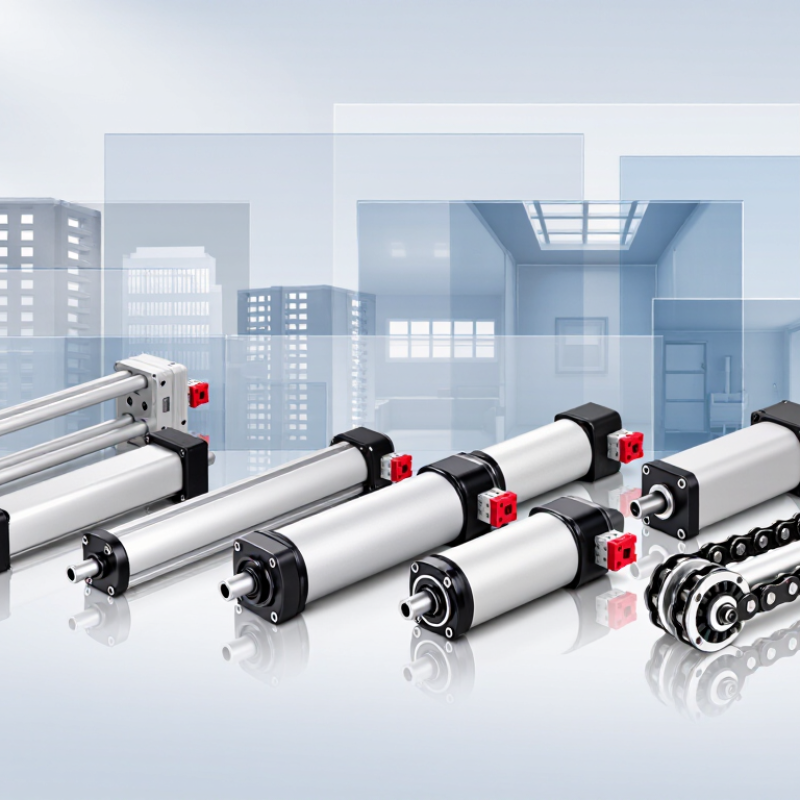
China’s window actuator motor industry covers several practical designs. Linear actuators use a screw mechanism to push or pull a sash along a fixed stroke. Chain actuators suit lighter windows and provide compact installation near the frame. Rack-and-pinion systems deliver steadier movement for larger openings, although they may require more alignment. Tubular motors commonly operate rolling shutters and shades.
Each type serves a different function. An actuator can open high-level windows for daily ventilation, close them during rain, or support smoke-control systems when properly certified. Key terms include stroke length, rated load, torque, duty cycle, operating voltage, and limit switch. IP rating describes resistance to dust and water. Feedback sensors can report position, but they add wiring and possible failure points. Keep it simple.
During supplier evaluation, I would check measured force, noise, thermal rise, and cycle life rather than relying only on catalog figures. A motor that lifts 300 newtons may struggle if the window seal is stiff or the hinge is poorly aligned. Installation details matter more than many buyers expect. Test the actuator at low temperature and under repeated cycles. Small errors become obvious.
A neat specification sheet can still mislead. Some published noise values use ideal laboratory conditions. Real buildings include wind pressure, frame friction, and uneven loads. Reliable manufacturers should provide test records, traceable materials, clear wiring diagrams, and responsive technical support. Selection should match the window’s weight, opening angle, climate exposure, and control system, not just its lowest quoted price.
Window Actuator Motors: Typical Supply Voltages by Motor Type
This chart presents representative nominal supply voltages commonly used in window actuator systems. Actual specifications vary according to actuator force, stroke length, control architecture, and installation requirements.
China’s 24 V DC Actuator Market: Applications and Demand Indicators
China’s 24 V DC actuator market is expanding across smart windows, ventilation systems, solar trackers, medical beds, and industrial equipment. These applications need controlled movement, low-voltage safety, and reliable operation in dusty environments. Building automation remains a strong demand indicator. The International Energy Agency’s Buildings 2023 report states that buildings consumed about 30% of global final energy in 2022. This supports investment in automated shading and ventilation.
Demand is also visible in China’s industrial and transport sectors. The National Bureau of Statistics reported construction industry output above RMB 8 trillion in 2023. Many commercial projects now specify synchronized window actuators for smoke control and natural ventilation. China’s auto industry produced 30.16 million vehicles in 2023, according to the China Association of Automobile Manufacturers. Commercial vehicles and charging infrastructure can require 24 V motor systems, especially where longer cable runs and higher starting torque matter.
For top manufacturers, buyers should examine stroke accuracy, rated load, duty cycle, noise, ingress protection, and controller compatibility. Testing under repeated cycles is essential. Laboratory claims can look impressive. Field performance may differ. A practical evaluation should include cold starts, voltage fluctuation, dust exposure, and emergency override tests. Some market forecasts predict steady double-digit actuator growth, but the figures vary by product definition and data source. That uncertainty deserves attention.
Ranking Criteria: 100–1,000 N Force, Stroke, Speed, and Duty Cycle
China Top 10 Window Actuator Motor Manufacturers?
Ranking Criteria: 100–1,000 N Force, Stroke, Speed, and Duty Cycle
A credible ranking should begin with measured performance, not catalog language. We compare actuator motor manufacturers across a 100–1,000 N force range. This range covers light roof windows, ventilation panels, and heavier architectural openings. Test loads must match the stated force. Otherwise, the number means little. Stroke length is checked in millimeters, from compact 100 mm travel to extended 1,000 mm movement. Installation space matters too. A long stroke is not automatically better.
Speed is recorded under load, not during an empty bench test. A motor moving quickly without resistance may perform poorly on a real window. Duty cycle receives equal attention. We examine repeated opening and closing, motor temperature, noise, and recovery time. For example, an actuator rated at 800 N should not be judged after one short movement. It needs repeated cycles. Testing also reviews limit-switch accuracy, overload protection, corrosion resistance, and documentation quality. Samples should be evaluated by experienced engineers using consistent fixtures. Public specifications are useful, but they are not always complete. Some figures need verification. That weakness deserves attention. A strong manufacturer provides traceable test data, stable production quality, and practical technical support. The ranking remains adjustable when field results challenge laboratory assumptions.
Supplier Comparison: IP54–IP65 Protection, Testing, Capacity, and Support
Selecting among China’s top window actuator motor manufacturers requires more than comparing prices. Protection ratings deserve close attention. Under IEC 60529, IP54 resists limited dust ingress and water splashes, while IP65 provides dust-tight protection and water-jet resistance. These ratings describe laboratory conditions, not every installation environment.
Labels can mislead.
A 2024 report by Fortune Business Insights valued the global smart window market at over USD 5 billion and forecast strong growth through 2032. That growth increases pressure on suppliers to prove reliability. Ask for IP test reports, torque curves, insulation results, and endurance records. Practical testing should include repeated full-load cycles, stall protection, thermal cycling, noise measurement, and cable-flex testing. One successful sample proves little.
Manufacturing capacity also needs evidence. Request monthly output, production lead time, inspection staffing, and traceability procedures. A supplier producing thousands of units monthly may still struggle with customization. Review first-article samples before approving a larger order. Support is equally important: clear drawings, firmware or control compatibility, spare-parts planning, and response times should appear in writing. The International Energy Agency’s building-efficiency research continues to highlight automation’s role in reducing operational energy demand, but poorly adjusted actuators can waste energy through repeated movement. That detail is easy to overlook. I would compare real field feedback with factory claims, because neither side is always complete.