Request a Quote
ma
Leave Your Message

2026 Best Power Window Actuator Suppliers for Global Buyers

For global buyers, choosing a Power Window Actuator supplier involves more than comparing prices and product photographs. Vehicle platform, installation space, motor strength, noise levels, connector design, and production consistency all influence the final decision. A suitable supplier should provide clear technical drawings, material information, test records, and traceable quality procedures. These details matter when an actuator must lift cold glass repeatedly during a winter morning.

Automotive mechatronics specialist Dr. Martin Schmitt observes, “A window actuator is small, but its reliability is felt every day.” This practical view reflects the product’s real purpose. Drivers notice hesitation, vibration, unusual clicking, and uneven movement immediately. Global buyers should therefore examine cycle testing, gear durability, sealing performance, voltage stability, and compatibility with original equipment systems. Factory audits and sample testing remain valuable, even when certifications appear complete.

The best supplier is not always the largest one. Sometimes, a focused manufacturer responds faster and solves fitment problems more carefully. That said, supplier claims should never replace independent verification. A polished catalog can hide weak after-sales support. Delivery promises may also change under pressure. Buyers should compare production capacity, tooling control, warranty handling, and communication quality before approving a long-term program.

This guide reviews leading 2026 suppliers through a practical purchasing lens. It considers product breadth, engineering capability, quality evidence, export experience, and customization support. Some rankings may remain debatable. That is useful. Honest comparison leaves room for technical judgment, regional needs, and lessons from real vehicle testing.

2026 Best Power Window Actuator Suppliers for Global Buyers

What Is a Power Window Actuator and How Does It Work?

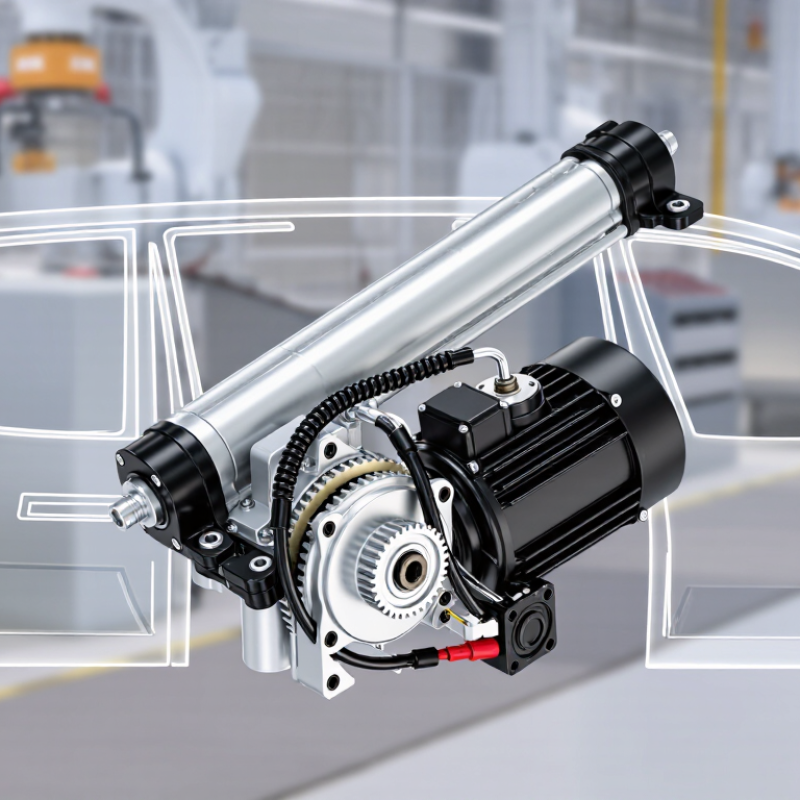
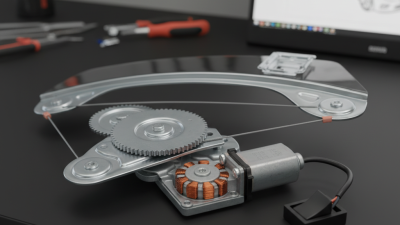
A power window actuator is the electric mechanism that moves a vehicle’s glass up and down. It usually combines a compact motor, gears, and a regulator. When the driver presses the switch, the control module sends low-voltage power to the motor. The motor turns the gears, while the regulator converts rotation into controlled vertical movement. Reversing the current changes the motor direction. Simple in principle. Not always simple in use.

The actuator must lift heavy glass quietly, repeatedly, and within a narrow door cavity. Sensors may detect position or resistance, helping the system stop during an obstruction. Heat, dust, water, and misalignment can still shorten its service life. In practical inspections, unusual clicking often suggests worn gears, while slow travel may indicate friction, weak voltage, or a failing motor. Diagnosis should measure voltage under load, not only at rest. That small detail is often missed.

Global production creates a substantial replacement and original-equipment demand. The International Organization of Motor Vehicle Manufacturers reported approximately 93.5 million vehicles produced worldwide in 2023. The International Energy Agency recorded nearly 14 million electric car sales in the same year. These trends increase demand for reliable low-voltage motion components, although electric vehicles do not eliminate mechanical wear. Suppliers should verify connector design, load capacity, cycle testing, noise performance, and corrosion resistance. Reported specifications can look impressive. Real door testing may reveal otherwise. Useful references include OICA, 2023 Production Statistics, and IEA, Global EV Outlook 2024.

2026 Best Power Window Actuator Suppliers for Global Buyers - What Is a Power Window Actuator and How Does It Work?
A practical, brand-neutral comparison of actuator technologies, operating requirements, quality criteria, and supplier capabilities.
Supplier / Product Category What It Is Typical Electrical System How It Works Common Applications Key Buying Criteria
Standalone DC Window Motor Supplier Provides the geared electric motor that drives an existing window regulator mechanism. 12 V DC
Common in passenger vehicles.
An electric motor rotates a reduction gear. The gear converts high-speed, low-torque rotation into slower, higher-torque movement for window travel. Replacement parts, service workshops, and vehicle platforms with an existing regulator design. Mounting pattern, connector design, rotation direction, output torque, noise level, stall protection, and vehicle compatibility.
Cable-Driven Window Regulator Supplier Supplies a complete regulator using a motor, drum, cable, guides, and carrier plate. 12 V DC
Some commercial platforms use 24 V systems.
The motor turns a cable drum. The cable moves a sliding carrier vertically along guide rails to raise or lower the glass. Modern passenger cars, rear doors, front doors, and compact door modules. Cable durability, guide-rail alignment, anti-drop design, glass attachment, travel length, corrosion resistance, and installation consistency.
Scissor-Type Regulator Supplier Provides a linkage-based mechanism in which crossed arms move the window glass through a guided arc. 12 V DC
Usually paired with a geared motor.
A rotating gear drives a pivoting arm. The scissor linkage transfers the motor force to the glass carrier and produces vertical movement. Older vehicle platforms, replacement assemblies, and applications requiring a robust metal linkage. Linkage strength, pivot wear, grease retention, glass alignment, operating noise, anti-pinch compatibility, and corrosion protection.
Integrated Motor-and-Regulator Supplier Delivers a preassembled module containing the motor, regulator, carrier, guides, and electrical interface. 12 V DC
Vehicle-specific electrical calibration may be required.
The integrated motor drives the regulator while the complete assembly guides and supports the window glass throughout its travel. Original-equipment production, fleet maintenance, and fast replacement programs. Plug-and-play fit, assembly tolerances, connector compatibility, test records, packaging protection, and installation time.
Commercial-Vehicle Actuator Supplier Provides higher-duty window actuators or regulator assemblies for buses, trucks, vans, and utility vehicles. 12 V or 24 V DC
Voltage must match the vehicle system.
A geared motor supplies repeated lifting force through a cable, scissor, or other regulator design selected for larger or heavier glass. Heavy-duty doors, fleet vehicles, buses, trucks, and off-road equipment. Duty cycle, load capacity, thermal performance, vibration resistance, sealing, serviceability, and fleet-level spare-parts support.
Custom-Engineering Actuator Supplier Develops application-specific motors, regulators, brackets, connectors, or complete window modules. 12 V or 24 V DC
Defined by the vehicle electrical architecture.
The supplier designs the gear ratio, mounting geometry, travel, connector, and control interface to meet a specified glass mass and operating profile. New vehicle programs, specialty vehicles, low-volume platforms, and retrofit projects. Design capability, prototype lead time, validation process, CAD data, engineering change control, tooling ownership, and production scalability.
Aftermarket Replacement Supplier Offers replacement actuators or regulator assemblies matched to existing vehicle applications. Usually 12 V DC
Application-specific connector and mounting points.
The replacement unit connects to the original vehicle switch and wiring, then uses a geared motor to move the regulator and glass. Vehicle repair, independent workshops, distributors, and online replacement-parts channels. Application coverage, interchangeability, dimensional accuracy, warranty terms, packaging, documentation, and batch consistency.
Quality and Compliance-Focused Supplier Supplies actuators with documented testing, traceability, and controlled manufacturing processes. 12 V or 24 V DC
Validated for the intended vehicle system.
The motor and regulator are evaluated for electrical, mechanical, environmental, and endurance performance before shipment. Global buyers requiring repeatable quality, audit readiness, and regulated automotive supply chains. ISO 9001 or IATF 16949 quality systems, incoming inspection, end-of-line testing, endurance data, lot traceability, and corrective-action support.
Procurement note: Actual voltage, torque, travel, speed, duty cycle, connector configuration, and mounting dimensions vary by vehicle and actuator design. Buyers should confirm the vehicle application, glass weight, regulator geometry, electrical interface, environmental requirements, and validation results before placing an order.

Key Factors for Evaluating Global Power Window Actuator Suppliers

Global buyers should evaluate power window actuator suppliers through measurable evidence, not attractive catalog claims. OICA reported 93.5 million motor vehicles produced worldwide in 2023, showing the scale behind replacement and original-equipment demand. A capable supplier should provide tested cycle-life results, current-draw data, noise measurements, and corrosion performance for each platform. Ask for samples from the intended production line. Laboratory samples can hide process variation.

Quality systems matter. IATF 16949 certification, documented PPAP capability, and traceable material records improve confidence, but certificates alone are not enough. Check failure-analysis reports, warranty-return rates, and corrective-action response times. The 2024 Deloitte Global Automotive Supplier Study describes continuing cost and supply-chain pressure across the sector. That pressure can affect magnets, gears, motors, and connector availability. Request dual-source plans and realistic capacity evidence. Empty promises are expensive.

Fit and safety need equal attention. Confirm mounting geometry, gear ratio, connector position, anti-pinch compatibility, and performance at low voltage and freezing temperatures. Ask suppliers to test dust, humidity, vibration, and repeated door slams. ISO 16750 environmental testing offers a useful reference for vehicle electrical components. Still, it may not reproduce every regional condition. This is where buyers should challenge the test plan. A supplier with local warehouses, clear export documentation, and responsive engineering support can reduce delays. Price remains important, but the lowest quote often excludes validation, packaging, or warranty exposure.

Top 2026 Supplier Categories by Product Range and Market Coverage

In 2026, global buyers can compare power window actuator suppliers through product range and market coverage. The strongest category is the OEM-integrated supplier. These companies usually support vehicle-specific actuators, matching connectors, mounting points, and control requirements. Their documentation is often detailed. Ask for test reports, material specifications, and traceability records before placing volume orders.

Aftermarket specialists offer broader catalogues for older and widely exported vehicles. They may stock front, rear, left-side, and right-side actuators in one program. This suits distributors serving mixed vehicle populations. However, catalog size can hide inconsistent fitment data. Request sample units and compare gear noise, travel speed, wiring length, and mounting-hole accuracy. Small differences create installation delays.

Regional distributors provide faster delivery and local technical support. They are useful when buyers need small batches, replacement parts, or language-specific documents. Contract manufacturers and engineering suppliers are better for custom housings, private specifications, and new vehicle platforms. Their market coverage may be narrower, but engineering access is usually stronger. Check production capacity, inspection frequency, packaging quality, and warranty handling. No category is perfect. A supplier with wide coverage may have slower revisions, while a focused supplier may lack dependable overseas logistics. That trade-off deserves careful review.

How to Compare Quality, Compatibility, Pricing, and Certifications

Selecting power window actuator suppliers requires more than comparing unit prices. OICA recorded 93.5 million motor vehicles produced worldwide in 2023, showing the scale and variation of global fitment demand. The IEA’s Global EV Outlook 2025 reported more than 17 million electric cars sold in 2024. These vehicles may use different voltage logic, sealing requirements, and communication systems. Check connector pinouts, mounting holes, gear direction, motor torque, and anti-pinch behavior against the original part. A familiar-looking actuator can still fail after installation.

Quality should be verified through evidence, not attractive claims. Request endurance-test records, noise measurements, corrosion results, and operating data from −40°C to 85°C. Ask whether samples passed repeated window cycles under load. Small details matter. Compare landed cost, tooling fees, minimum order quantities, warranty terms, and replacement rates.

A cheaper actuator may become expensive after field returns. IATF 16949 and ISO 9001 support process control, while FMVSS 118 or applicable UNECE requirements may address power-window safety. However, a certificate does not guarantee perfect compatibility. Independent inspection is still wise. Some suppliers provide incomplete test files, and buyers should treat that gap as a risk, not a minor paperwork issue. Supplier traceability, batch coding, PPAP documentation, and clear change-control procedures make future problems easier to investigate.

Best Practices for Sourcing and Managing International Supplier Partnerships

For 2026 procurement, supplier selection should begin with evidence, not a polished catalog. Ask for process capability data, actuator noise records, current-draw curves, endurance results, and change-control history. A factory visit should follow sample approval. Watch operators assemble gears, seals, connectors, and housings. Record line speed, error checks, and quarantine practices.

Require IATF 16949 certification or documented alignment, APQP files, PPAP submissions, and lot-level traceability. These controls show whether a supplier can repeat performance, not merely produce one impressive prototype.

Numbers can lie.

International partnerships need a shared operating rhythm. Use a rolling 12-month forecast, frozen order windows, agreed safety stock, and written escalation times.

UNCTAD’s Review of Maritime Transport 2024 states that shipping carries over 80% of global trade by volume. Port disruption therefore deserves a tested contingency plan. Qualify a second production route when tooling and validation permit it.

The World Bank’s Logistics Performance Index 2023 shows major gaps in customs, infrastructure, and delivery reliability across markets. Compare total landed cost, not unit price. Include duties, packaging damage, transit variance, and working capital.

IEA’s Global EV Outlook 2024 reported nearly 14 million electric-car sales in 2023, up over 35% year on year. Demand may shift quickly. Share forecast changes early, but avoid promising perfect accuracy.

Quarterly reviews should examine field returns, warranty trends, corrective-action closure, and engineering changes. Leave room to admit a bad assumption. That honesty often protects the partnership.