Top Electric Lift Actuator Solutions for Global Buyers?
Electric lift actuators are essential in various industries. They provide efficient, reliable movement for applications ranging from automotive to medical devices. As buyers seek the best solutions, identifying the right actuator can be challenging.
Various manufacturers offer unique features. Buyers must navigate options based on specific needs. Factors such as load capacity, speed, and environmental conditions should be considered. A thorough analysis can reveal which products excel. Yet, with so many choices, confusion can arise, making purchasing decisions difficult.
In this evolving market, understanding the implications of your choice is crucial. Quality electric lift actuators enhance productivity, but not all options deliver the same performance. Evaluating your requirements against available products leads to better outcomes. Relying on industry knowledge and expert reviews can guide you to the best investment.
Overview of Electric Lift Actuators and Their Applications
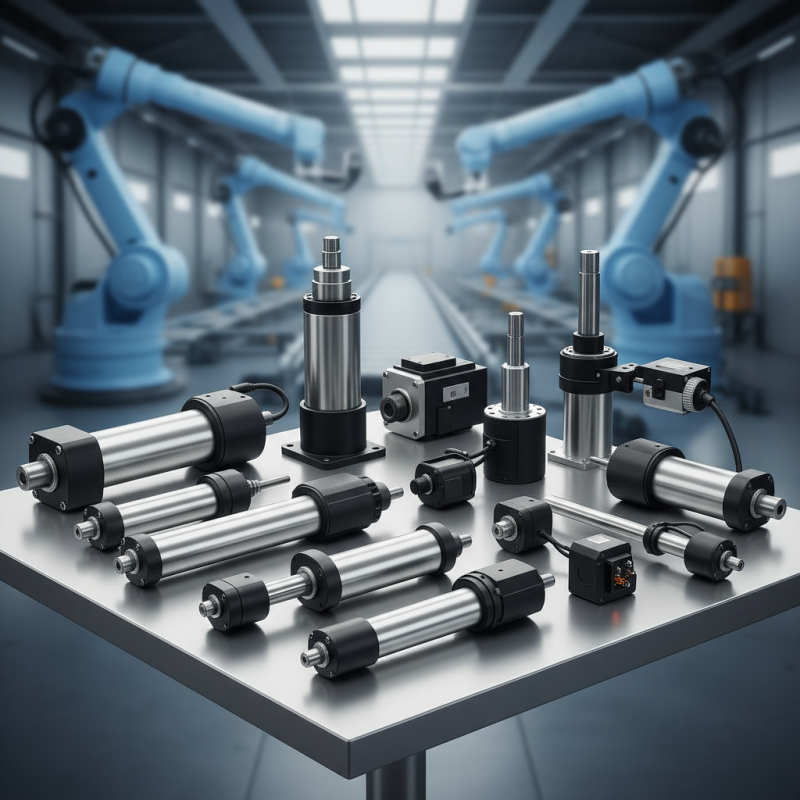
Electric lift actuators are vital components in many industries. They enable precise control over lifting and lowering mechanisms. Their applications range from medical equipment to automotive manufacturing. Electric lift actuators offer simplicity and efficiency. They are often chosen for their low maintenance needs and reliability.
These actuators work by converting electrical energy into mechanical movement. This process allows for accurate positioning of loads. For industries such as healthcare, this means easier adjustments for patients. In manufacturing, it means enhanced productivity. The flexibility of electric lift actuators makes them suitable for diverse environments.
Tip: When selecting an actuator, consider the load capacity. It's essential to match the actuator's strength with the application's demands.
Tip: Always check for compatibility with your existing systems. This ensures seamless integration and optimal performance.
While electric lift actuators are generally reliable, unexpected failures can occur. Regular maintenance is crucial to minimize downtime. Operators should be trained to handle malfunctions. Reflecting on these aspects can lead to improved practices and better outcomes.
Top Electric Lift Actuator Solutions for Global Buyers
| Application |
Load Capacity (kg) |
Stroke Length (mm) |
Power Supply (V) |
IP Rating |
| Industrial Automation |
1000 |
500 |
24 |
IP65 |
| Medical Equipment |
150 |
300 |
12 |
IP54 |
| Automotive |
200 |
400 |
48 |
IP67 |
| Furniture Adjustment |
100 |
150 |
24 |
IP20 |
| Aerospace |
300 |
600 |
28 |
IP68 |
Key Features to Consider When Selecting Electric Lift Actuators
When selecting electric lift actuators, several key features are essential to ensure optimal performance. Consider the lifting capacity, which must match your specific application demands. A recent industry report highlights that over 60% of units operate within a range of 1000 to 3000 Newtons. Choosing the right capacity can prevent operational failures and increase safety.
Speed is another critical factor. The average lift actuator operates at speeds of 5 to 40 mm per second. This range can significantly impact the efficiency of your system. A proper evaluation of your speed requirements can lead to better productivity in operations.
Tip: Analyze your workflow to determine the required speed. This analysis could guide you in making more informed decisions.
Another feature to consider is the actuator's durability and environmental resistance. Many actuators are designed to function in harsh environments, with corrosion resistance being a prominent aspect. According to data, nearly 30% of actuator failures stem from environmental conditions. Selecting the right material and level of protection is vital to long-term reliability.
Tip: Regularly inspect actuators for any signs of wear. This habit can extend their lifespan significantly.
These elements combined make a difference in functionality. Reflecting on your specific needs will ensure better performance and longevity.
Top Electric Lift Actuator Manufacturers and Their Offerings
Electric lift actuators play a crucial role in various industries, from healthcare to automotive. Their design and functionality have evolved significantly. Manufacturers focus on parameters like load capacity, speed, and lifespan. They offer diverse products to meet different needs. Some actuators are compact and lightweight, ideal for limited spaces. Others provide strong lifting power for heavy-duty tasks.
Selecting the right actuator is not always straightforward. Buyers must consider application requirements. Some manufacturers specialize in custom solutions, tailoring products to specific needs. The quality of materials used can affect performance and reliability. Competitive pricing is essential, but it should not compromise safety or efficiency.
With numerous players in the market, it becomes essential to evaluate options carefully. Reliability and ease of maintenance are often overlooked but critical factors. It's wise to analyze user feedback and industry tests. This will provide insights into real-world performance. Collaboration with knowledgeable suppliers can enhance the decision-making process, fostering a clearer understanding of available options.
Top Electric Lift Actuator Solutions for Global Buyers
Comparison of Different Electric Lift Actuator Technologies
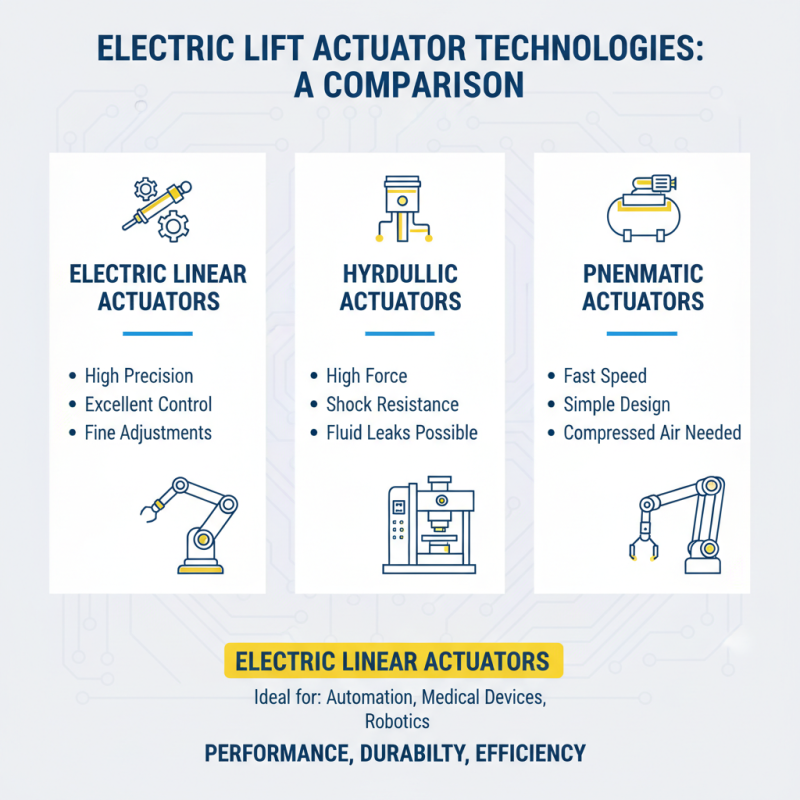
Electric lift actuators are crucial in various applications, such as automation, industrial machinery, and medical devices. Different technologies emerge to meet the demands for performance, durability, and efficiency. Among these, electric linear actuators stand out. They offer high precision and excellent control, making them ideal for applications requiring fine adjustments.
One common type of electric lift actuator is a screw-driven actuator. This technology converts rotary motion into linear motion, which provides a straightforward and reliable solution. However, they can suffer from wear over time, leading to reduced accuracy. In contrast, belt-drive systems can achieve faster movements and higher load capacities. Yet, their complexity in design may raise maintenance concerns. Furthermore, the choice between these technologies often boils down to specific application needs and environmental conditions.
It is essential to consider the trade-offs between these options. Each actuator type can excel in certain situations but may lag in others. The key is to evaluate the specific requirements of your application carefully. Look for insights from industry experts when making decisions. Testing prototypes in real-world scenarios often reveals unexpected challenges and advantages. Such a strategic approach will help ensure reliability and efficacy in your choice of electric lift actuator technology.
Market Trends and Future Directions for Electric Lift Actuators
Electric lift actuators have gained significant traction in various industries, particularly in manufacturing and healthcare. According to recent market research, the global electric lift actuator market is projected to grow at a CAGR of 5.2% from 2023 to 2030. This growth is driven by increasing automation and the need for precise control in lifting applications. Industries are focusing on integrating smart technologies into actuators, enhancing their capabilities.
The demand for electric actuation systems is shifting towards energy efficiency and sustainability. A report highlights that about 70% of users prioritize energy-efficient solutions over traditional hydraulic systems. Furthermore, advancements in materials and design are enabling actuators to become lighter and more efficient. However, manufacturers face challenges in ensuring compatibility with existing systems and meeting diverse customer requirements. These factors can affect product development timelines and cost management.
Future directions indicate a rise in demand for IoT-integrated lift actuators. This integration allows for real-time monitoring and predictive maintenance applications. Nevertheless, many companies are still grappling with the initial investment costs associated with these advanced technologies. Continued research and development are crucial to addressing these challenges and ensuring that electric lift actuators remain viable for various global markets.